The Tbilisi–Batumi route is one of the most popular in Georgia. Tourists, locals, families with children, solo travelers, and those heading to the coast for a few days or their entire vacation all use it.
We will compare several ways to get from Tbilisi to Batumi in 2026: by plane, train, bus, minibus, taxi, or private transfer. Accordingly, this guide—complete with prices and schedules—will help you choose the best option. Moreover, we’ll break down the pros and cons of each, share up-to-date tips, and highlight what to consider before your trip.
- Distance from Tbilisi to Batumi
- Tbilisi–Batumi way in short
- Comparing All the Ways
- Tbilisi–Batumi by Train
- Tbilisi–Batumi by Bus
- Tbilisi–Batumi by Minibus
- Tbilisi–Batumi by Plane
- Tbilisi–Batumi by Car
- Tbilisi–Batumi by Taxi
- Transfer from Tbilisi to Batumi
- Frequently Asked Questions
- Conclusion
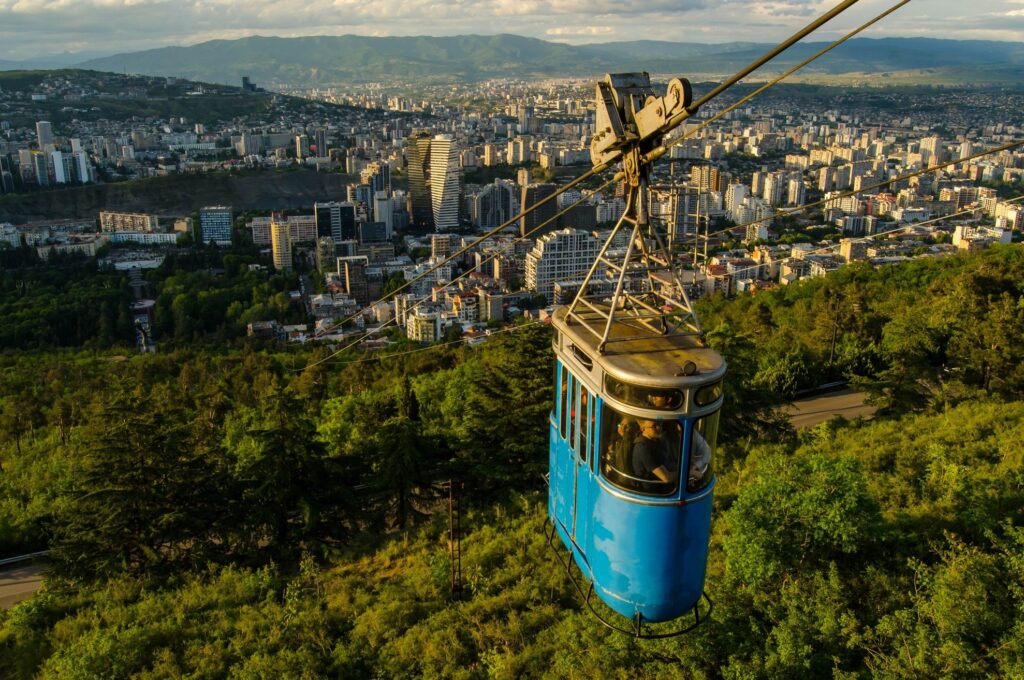
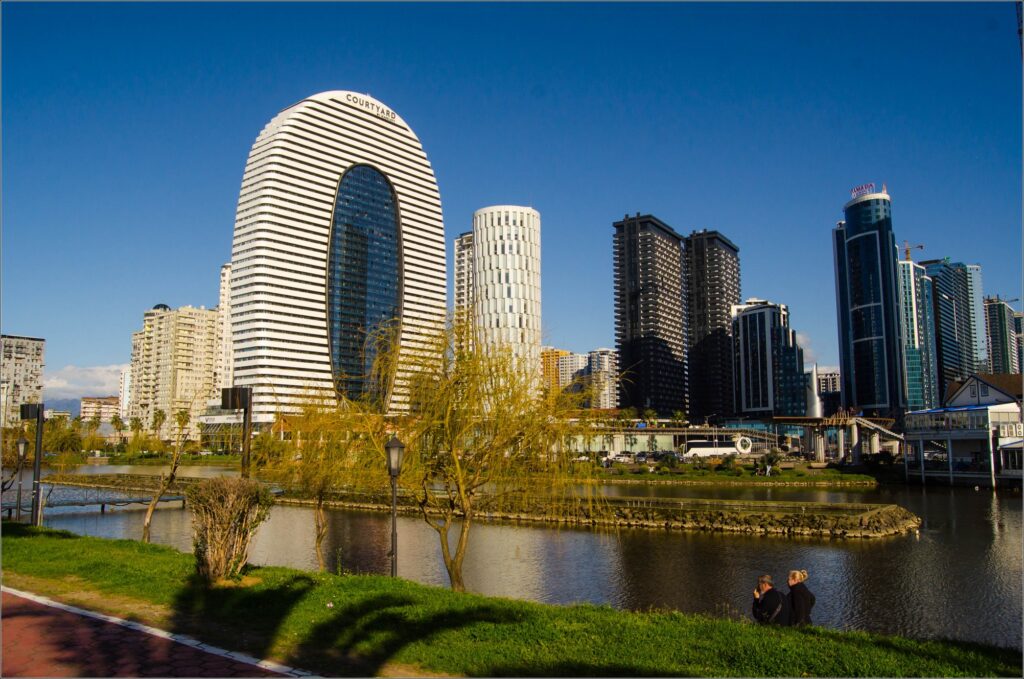
Distance from Tbilisi to Batumi
Georgia’s capital lies in an intermontane basin in the eastern part of the country, whereas Batumi is located in the southwest, right near the Turkish border. The distance between the two cities varies by mode of transport. For example, the road distance is roughly 360 kilometers, but the railway route measures 343 kilometers.
Travel time largely depends on your choice of transport: the trip takes between five and seven hours.
- By car: 4.5–5.5 hours
- By train: 5 hours 12 minutes
- By bus: 6 hours
Most of the route follows a new highway through the Rikoti Pass, including tunnels and bridges. The road is in good condition, fully paved. The trickiest section is the winding road after the mountain pass, with its tunnels, climbs, descents, and sharp turns.
Travel duration depends not only on the chosen transport but also on the season, traffic conditions, number of stops, and specific departure. On the high-speed train, the trip usually takes just over five hours. Buses and minibuses take longer, while driving times can vary due to traffic and breaks. During peak season, long weekends, and summer, tickets for convenient departures sell out quickly, so planning ahead is wise.
Several options exist for getting from Tbilisi to Batumi: high-speed train, bus, minibus, taxi, transfer, or rental car. Each has its own advantages and drawbacks. Therefore, this article explains how long the journey takes, how to make the trip independently, where to buy tickets, and which option suits your budget, travel season, and personal preferences.
Choose your transport not only by price but also by how well you tolerate the journey. If you’re traveling light and want to save money, public transport works well. However, if you’re with children, carrying heavy luggage, or simply prefer to avoid exhaustion, a taxi, transfer, or train makes more sense.
Tbilisi–Batumi way in short
Here’s a summary of the key points about Tbilisi–Batumi way.
- Train – the simplest and cheapest option
- Car rental – ideal for sightseeing along the way
- Driver transfer – the most stress-free and comfortable choice
If your main goal is to reach the coast quickly, I recommend the train or bus.
For maximum experiences, however, rent a car or hire a driver with stops.
Car Rental in Georgia – offers freedom and roadside stops. Perfect for turning the trip into a journey and visiting Mtskheta, Borjomi, or Kutaisi.
- Price: from €20/day (from €30 in season)
- Travel time: ~4.5–5 hours without stops
Booking: Localrent – no deposit, credit card, or deductible required. Pay a 20% advance with any card.
Tbilisi–Batumi Transfer – the most comfortable option. If you’d rather not drive, take a car with a driver and travel calmly, including stops.
- Price: €100–150 per vehicle
- Travel time: ~4.5–5 hours of pure driving, plus optional stops
Booking: GoTrip (cash payment to the driver) or Kiwitaxi.
Tbilisi–Batumi Train – the best balance of price and time. The Stadler train with seating is the most popular choice for a fast trip to Batumi.
- Price: from 35 GEL (~€11)
- Travel time: 5 hours
Tickets: railway.ge or go to the train station.
If you prefer lying down, a night train from Yerevan to Batumi passes through Tbilisi in summer for €25–35. More details in the train section below.
Tbilisi–Batumi Bus – a budget option. Suitable when price matters and travel time isn’t critical.
- Price: from 40 GEL (~€13)
- Travel time: 6–7 hours
Tickets: citybus.ge or metrogeorgia.ge
Minibus (they call it in Russian, “Marshrutka”) – costs the same as a bus but offers less comfort and poorer travel conditions.
Plane – the fastest flight time, though airport transfers and waiting time mean no significant overall savings.
- Price: 125 GEL (~€40)
- Flight time: 40 minutes
Comparing All the Ways
Below you will find the summary with a comparison of all the ways to get Batumi from Tbilisi. This table will help you to choose the most convenient style of travelling for your company – for your budget, comfort level and travel time.
| Transport | Time | Price | Comfort | Booking | Suitable for |
|---|---|---|---|---|---|
| Train | 5 hours 12 min | $15-45 | High | Yes | Couples and families, big luggage |
| Bus | 6-7 hours | $13 | Medium | Yes | Singles or couples, small luggage |
| Minibus | 5,5-6,5 hours | $11 | Low | No | Budget travellers, no luggage |
| Taxi | 5-6 hours | from $130 | Medium | No | Families and couples, big luggage |
| Transfer | 5-6 hours | from $120 | High | Yes | Families and companies, big luggage |
| Car rental | 5-6 hours | from $30 + fuel | High | Yes | Families and companies, freedom lovers |
| Plane | 50-60 min | $40 | High | Yes | Busines travellers, small luggage, new experience seekers |
Tbilisi–Batumi by Train
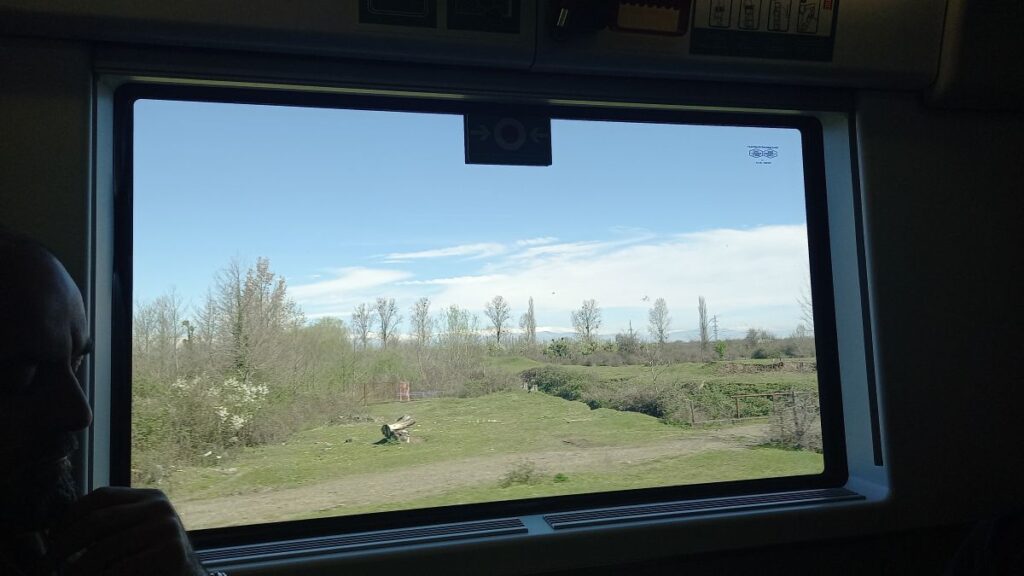
Traveling by train is arguably the most comfortable way to get from Tbilisi to Batumi. It combines speed, convenience, and a reasonable price. The high-speed, double-decker Stadler train—which departs from Tbilisi Central Station—is especially popular.
For many tourists, the train feels like the safest everyday choice. You know the departure time, the platform, and the cost. Consequently, you waste no energy searching for a last‑minute minibus or bus. This makes it particularly convenient for families, couples, and anyone traveling with suitcases.
The high-speed train also works well for trips during peak season. By buying a ticket in advance, you secure your preferred departure time without worrying about being stuck with an inconvenient connection. For most travelers, therefore, the train answers the question of how to get from Tbilisi to Batumi without unnecessary hassle.
The journey to Batumi takes 5 hours and 12 minutes.
Booking & Tickets
Buy your tickets online through the official Georgian Railways website: gr.com.ge. Registration is required, but the process is easy and intuitive.
Ticket prices for the Tbilisi–Batumi train
- Business class: 125 GEL (~€40)
- 1st class: 75 GEL (~€25) for adults; 39 GEL for children (ages 5–9)
- 2nd class: 35 GEL (~€12) for adults
You can select your specific seat for an extra 1 GEL. This is worthwhile because some seats face backward relative to the direction of travel. That arrangement may be uncomfortable for children or anyone prone to motion sickness. The direction of travel is shown on the carriage layout.
Child discounts:
One child under 5 may travel for free if they do not occupy a separate seat. If they need their own seat, a child ticket is required.
Children aged 5 to 9 ride on a child ticket with a 50% discount. Carry a birth certificate as proof.
Children aged 10+ need a full adult ticket.
How to Buy
Ticket offices start selling tickets 40 days before the trip. Online purchases and schedule checks, however, are only possible 20 days in advance.
On railway.ge or the app, select “Internet Tickets,” find the train for your preferred date, register, enter passenger details in Latin letters, and provide your passport number. Pay by card; a 2% commission applies.
After purchase, you will receive a booking code. Nothing needs to be printed. Simply take a photo or download the ticket with the code to your phone, then show it to the conductor along with your passport.
Peak Season Warning
July and August are peak season. Tourists and locals alike head to the coast. Therefore, buy train tickets 5–7 days before your trip. On the day itself, or for the next two days, seats will likely be sold out. During other months, tickets are plentiful, so buying for same‑day or next‑day travel is easy.
Station Information
Address of the railway station in Tbilisi: 2 Station Square. It is located 100 meters from Station Square (Sadguris Moedani) metro station. On maps, search for Tbilisi Central Railway Station.
Stops along the route
The train stops at Kopitnari (Kutaisi Airport), Ureki (for Shekvetili, buy a ticket to Ureki), Kobuleti, and Batumi Central (the main railway station).
Batumi Central Station is 5 km from the city center. The easiest way to get there is by taxi; Yandex Taxi or Bolt will cost about 10 GEL. Alternatively, cross the road, walk to the bus stop, and wait for a bus or minibus.
2026 Train Schedule from Tbilisi to Batumi
In 2026, trains to Batumi depart at 8:00 and 17:10, plus seasonal services at 10:25 and 00:30.
The Stadler (Nos. 802, 804, 808, 812) is a modern, quiet, double‑decker train with seating only.
Departures from Tbilisi and arrivals in Batumi:
- 8:00 → 13:12
- 10:25 → 16:00
- 17:10 → 22:22
- 00:35 → 6:10
In the opposite direction (Batumi to Tbilisi):
- 8:00 → 12:59
- 16:50 → 21:49
Onboard Amenities
Comfort is another strong argument for the train. Carriages offer:
- Wi‑Fi
- Electrical sockets
- Comfortable seats
- Air conditioning
- Restrooms
- Drinks and food (on some services)
If you are traveling with luggage, special storage areas are provided.
Seats in first and second class differ in softness and layout.
First class: wide leather seats arranged in pairs.
Second class: three seats in one row, then two seats in the next row. The backrests are firm and recline only a couple of centimeters. Consequently, lying down is impossible.
Night Trains from Tbilisi to Batumi
Night Stadler No. 812 – operates only in summer. At first glance, it seems like a good choice (saving a night in a hotel). In reality, however, it has only seated carriages. The backrests do not recline, and lights stay on all night. No regular couchette or sleeping carriages exist.
Train No. 202 – this is the Yerevan–Batumi train. It stops in Tbilisi at 00:45 and arrives in Batumi at 7:30. It does not appear on the Georgian Railways website. Therefore, you must buy tickets through Armenian Railways. More details can be found in our article about the train from Yerevan to Tbilisi and onward to Batumi.
Pros and Cons
Pros of the Train
- Cheaper than flying
- Safe
- No baggage weight limits
- Ability to charge phones and devices
- Amenities (air conditioning and restroom)
Cons of the Train
- Inflexible schedule
- Need to buy tickets in advance online or at the counter
- Can be noisy
- No good place for large suitcases (they are often left near the carriage exits)
- Poor internet (Wi‑Fi is very weak, and mobile signal frequently drops out)
- Need to bring your own food and drink (no tea or coffee sold on board)
- No scenic views or opportunities to make stops along the way
- Complicated refund process
Tbilisi–Batumi by Bus
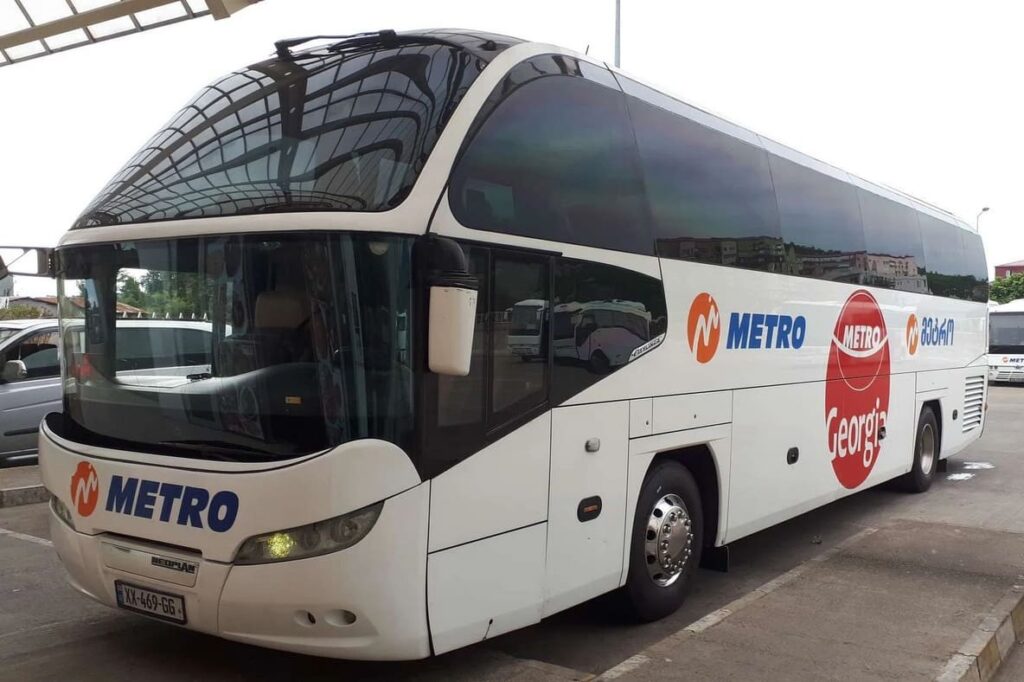
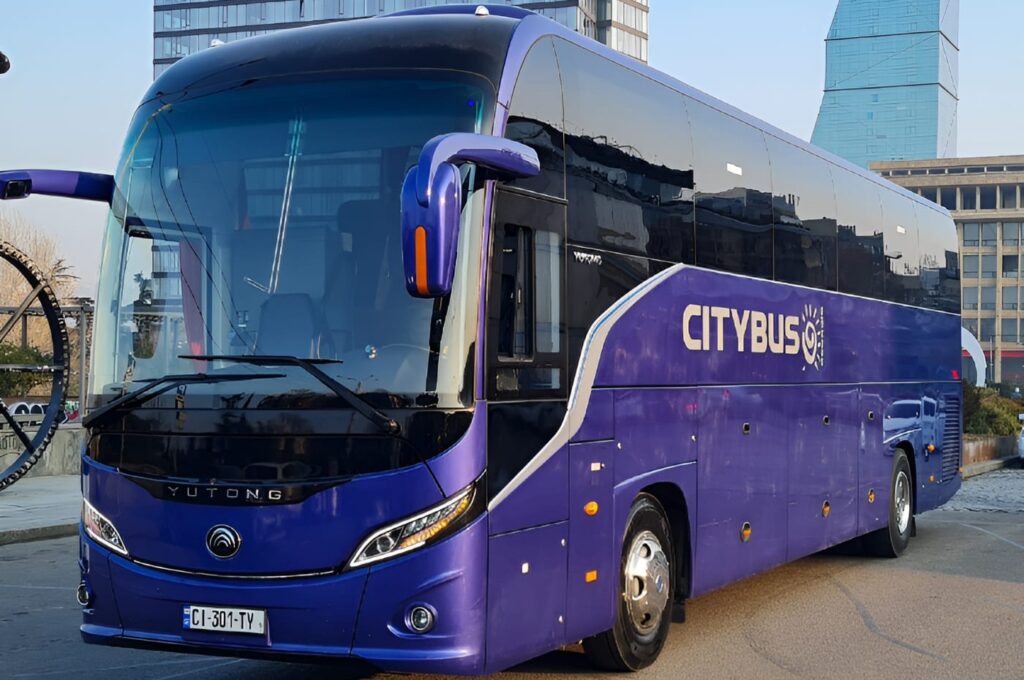
Two companies operate comfortable buses between Tbilisi and Batumi: Citybus and Metrogeorgia. These buses depart several times daily from Ortachala Station in Tbilisi, including night services. For current schedules, check the carriers’ official websites. Online tickets can also be purchased there, but only with a foreign bank card. Without such a card, you may buy tickets at the bus station ticket offices using cash. During peak season, purchasing in advance is advisable.
The bus offers a good balance of reasonable price and straightforward logistics. Unlike a minibus, it generally provides slightly more comfort. Compared to the train, furthermore, it may suit travelers who find it easier to depart from a bus station than to reach a railway station for a specific schedule.
Citybus.ge
Night and morning services depart from Tbilisi’s Ortachala Station at 1:00, 1:20, 9:00, 9:20, 16:00, and 16:20. Travel time is 5–6 hours. Tickets are available at the Metro Georgia ticket office inside Ortachala Station, though buying online in advance is better. A ticket costs 40 GEL (€13).
Each bus features Wi‑Fi, air conditioning, and screens for watching movies. The final stop is the Argo Cable Car station in central Batumi. For the return direction (Batumi to Tbilisi), the bus departs from Batumi Central Railway Station (3 Odyssey Dimitriadis Street).
Metrogeorgia.ge
You can buy tickets on the website, through the Metrogeorgia mobile app, or at the company’s office. The price is 40 GEL (€13), and travel time is 6 hours.
Tbilisi–Batumi Bus
Departure: Ortachala Station, 1 Guli Street, Tbilisi. Coordinates: 41.67512, 44.835648. Daily departures at 1:00, 9:00, 12:00, 19:00, and 23:00.
Batumi–Tbilisi
Arrival and departure: Batumi Central Bus Station, 3 Odyssey Dimitriadis Street, Batumi. Daily departures at 2:00, 9:00, 12:00, 18:00, and 23:59.
Useful Tips
Arrive at the bus 20–30 minutes before departure. Luggage is often stored separately in the baggage compartment; check with the driver beforehand. After purchasing your ticket, nothing needs printing. Simply arrive at the station 10–15 minutes before departure, go to the ticket office, give your seat numbers, and collect your boarding passes.
Buses usually arrive either in central Batumi (near the Argo Cable Car station) or at the railway station on the city’s outskirts. Confirm the arrival point when buying your ticket.
The Bus Journey
The bus follows the main highway, passing turnoffs to Grigoleti, Ureki, and Shekvetili. It makes a stop in Kobuleti. If you need to reach one of the coastal villages rather than Batumi itself, simply ask the driver to stop early.
Choosing a seat on the right side offers occasional sea views during the last 1.5 hours. When selecting your seat: if you have long legs, avoid the area near the central doors—a vertical partition leaves little legroom there.
The bus makes only one 20‑minute stop. At that stop, you can eat at a café, buy snacks, and use the restroom. Legroom is sufficient, seats recline, and Wi‑Fi and monitors (movies, TV, music, games) are available. Water, tea, and coffee are provided free of charge. Note, however, that the bus has no toilet.
The ride is comfortable, though part of the route includes winding roads. Therefore, if you suffer from motion sickness, the train remains a better choice.
Pros and Cons
Pros of the Bus
- Relatively affordable price
- Safer than a minibus
- Online ticket purchase with seat selection available
- No baggage weight limits; dedicated luggage space provided
Cons of the Bus
- Inflexible schedule (you may spend the whole day traveling, arrive late at night, or ride overnight without proper sleep)
- No opportunity to visit scenic spots or interesting restaurants along the way
- Slowest option compared to other transport modes
- Potentially noisy environment
Tbilisi–Batumi by Minibus
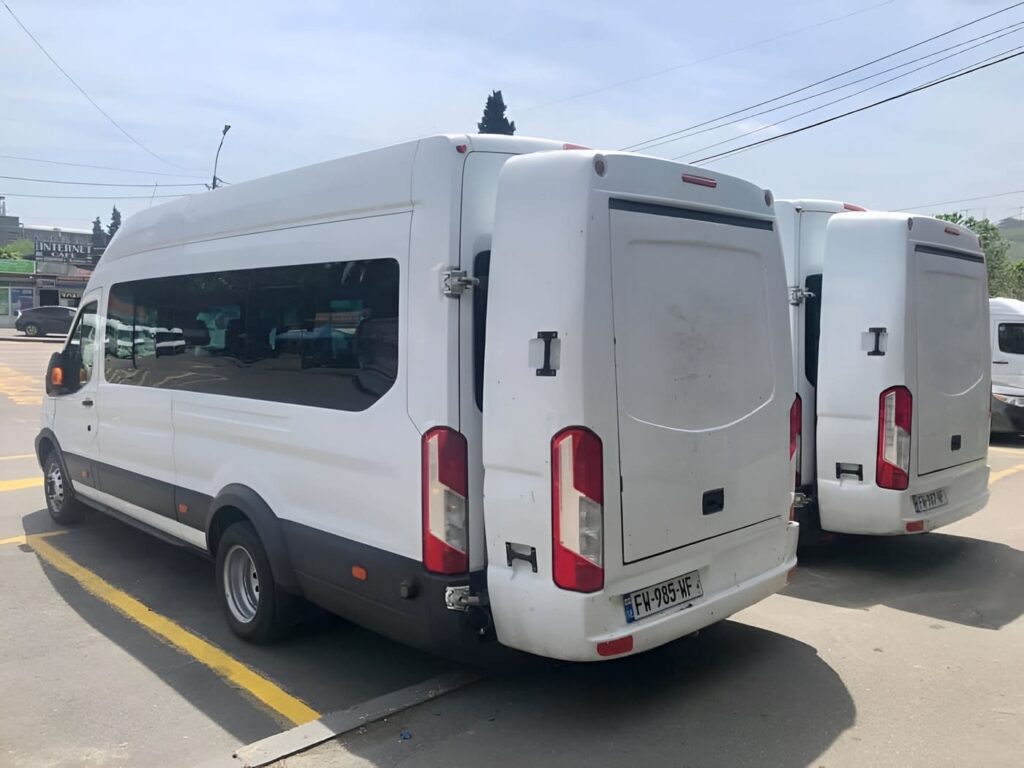
Minibus (or how in Georgia call it — “marshrutka”) is a traditional budget way to travel around Georgia. This option suits travelers willing to sacrifice comfort for savings. When your trip budget is tight, therefore, the minibus may be the most accessible choice—especially if train tickets are sold out or the bus schedule does not fit your timing.
For experienced independent travelers, this method works well. Beginners, however, may find it less convenient. The interior is usually more cramped, luggage space is tighter, and the journey feels more exhausting—particularly in summer, during hot weather, or with large suitcases. Nevertheless, the minibus remains popular. It appeals to those who want to save money, travel light, and feel comfortable with a no‑frills ride.
You can place luggage in the external compartment, though space there is limited. Inside the cabin, space for bags is scarce; legroom is similarly restricted. Furthermore, aggressive driving is common, which may cause anxiety. The driver might also smoke through an open window. Arrive early to secure a decent seat, and do not expect Wi‑Fi or charging outlets.
Departure Point
The main departure point is Didube Bus Station (next to the Didube metro station; coordinates: 41.7405, 44.7881). Occasionally, private minibuses can also be found near Samgori metro station or beside Tbilisi Central Railway Station, but these options are less reliable.
Departure from Batumi
The old bus station at 1 Mayakovski Street. Coordinates: 41.643717, 41.650378.
Schedule
No fixed schedule exists; drivers depart from the station roughly every hour once the vehicle fills up. As a guideline, expect services between 8:00 and 19:00, though trips continue until midnight. Early mornings and evenings have fewer departures.
Travel Time
The minibus is no faster than a bus or train. The journey takes 5.5–6.5 hours, depending on the number of stops, driving style, and traffic jams approaching Batumi. If you get an especially daring driver, you might arrive half an hour to an hour earlier.
Price
This is the cheapest option. A ticket costs 25–35 GEL (approximately 9–13 USD). Payment is made directly to the driver in cash; having small denominations ready in advance is wise.
Pros and Cons
Pros of the Minibus
- Cheapest available option
- Departs roughly every hour
- Possible to travel any day without advance ticket purchase
Cons of the Minibus
- No ability to reserve a seat or know the exact departure time
- No dedicated luggage compartment; suitcases are stored in the rear, where space is often insufficient
- Unsafe (most drivers drive fast and quite aggressively)
- Uncomfortable (cramped, no amenities)
- Tiring due to frequent stops for passenger pickup and drop‑off
- Hot, noisy, and stuffy during warm weather
- No chance to see scenic spots, rest, or stop at a restaurant along the way
- Tickets can only be bought with cash
Tbilisi–Batumi by Plane
Flying is the fastest way to get from Tbilisi to Batumi, yet it is also one of the most expensive. The airline Vanilla Sky operates this route. Its aircraft are designed for short flights; therefore, they are quite small and carry up to 20 passengers. Each traveler may bring baggage weighing up to 15 kg.
During peak season, flights run almost daily. The rest of the year, they operate three or four times per week. You can check the current schedule for the coming month on the official website. Tickets are available there as well or offline at the airline’s Tbilisi office. Be aware, however, that the online booking form does not always work.
The schedule changes with the season, so check it in advance on the website—or better yet, by phone. For most of the year, flights depart at 9:00 and arrive at 10:00 on Mondays, Wednesdays, and Fridays. On Tuesdays, Thursdays, and Saturdays, flights run from 12:30 to 13:30. Summer brings additional departures.
Important: Flights do not leave from Tbilisi International Airport. Instead, they depart from Natakhtari, a small airport located in the village of the same name, 23 kilometers from Georgia’s capital. You can reach Natakhtari via the carrier’s own buses (the meeting point is near the metal bicycle sculpture on Rose Revolution Square, opposite the Radisson Blue hotel), by taxi, or by private transfer.
Batumi Airport, where you will land, sits 7 km from the city center. A bus stop is located directly outside. Buses No. 9 and No. 10 run into the city: in summer from 7:00 to 24:00, and in winter from 8:00 to 22:00. Alternatively, you can call a taxi (cheaper via an app than through private drivers) or pre‑book a transfer.
- Price: 125 GEL ($46 USD)
- Airline website: ticket.vanillasky.ge/en
Pros and Cons
Pros of Flying
- Fast
- Safe
Cons of Flying
- Airport located 23 km from Tbilisi
- Tickets must be bought in advance and sell out quickly
- Limited baggage weight (up to 15 kg)
- Booking problems sometimes occur
- You miss the scenic road and any chance to visit interesting places along the way
- Inflexible flight schedule
- Complicated ticket refund process
Tbilisi–Batumi by Car
Renting a car is the option for those who want to travel completely independently, free from any fixed schedule. This is not merely a way to get from Tbilisi to Batumi; instead, it offers a chance to turn the journey into a separate part of your trip. Along the way, you can make stops, visit Gori, Ureki, or Kobuleti, or simply relax in a beautiful spot without adapting to public transport timetables.
Nevertheless, renting is not always justified. If your only goal is to reach the coast without any additional stops, the train may be simpler and more logical. For those wanting more freedom, an individual pace, and the ability to explore the country en route, however, a car delivers exactly that. Just remember to factor in rental costs, fuel, parking, and your overall confidence when driving a long highway.
Car rental suits couples, groups of friends, and solo travelers who enjoy building their own itinerary. In this case, the road between Tbilisi and Batumi ceases to be a tiring necessity and becomes a full‑fledged part of the experience.
Key Facts for the Tbilisi–Batumi Route by Car
- Distance: 360–400 km
- Travel time: 4.5–5 hours without stops
- Rental price: from €20–40 per day
- Fuel: ~€25–40 for the whole trip
- Total per person (2–3 people): only €20–30
Consequently, driving turns out to be quite predictable budget‑wise. For two or three people, it is often cheaper than it seems.
Requirements & Documents
Rental agencies typically require drivers to be at least 21 years old with a minimum of 3 years of driving experience. Some local agencies may have less strict rules. You will need your international passport and national driver’s license. An International Driving Permit is not required for travel within Georgia.
Road Difficulty
The road is straightforward—paved asphalt, a normal highway with a 110 km/h speed limit. You can drive a standard car at any time of year. As of December 2025, construction on the route through the Rikoti Pass was completed, adding 51 new tunnels and 97 bridges. Previously, the journey took 5.5–6 hours; now, you can manage it in 4.5 hours. Closer to the sea, winding roads and mountain turns begin.
If you make stops in Mtskheta, Borjomi, or Kutaisi, however, you will need to turn off onto ordinary roads through populated areas (one lane each direction) and railway crossings. There, average speed drops to 50–70 km/h. Be prepared for aggressive local driving styles, especially on narrow sections.
Why Drive?
The main advantage is total independence from timetables. You can stop in Mtskheta, visit Borjomi, explore Kutaisi, canyons, and caves. Instead of five hours of simple transit, you get a proper 1‑ to 2‑day journey.
Which Car to Rent in Tbilisi for Batumi?
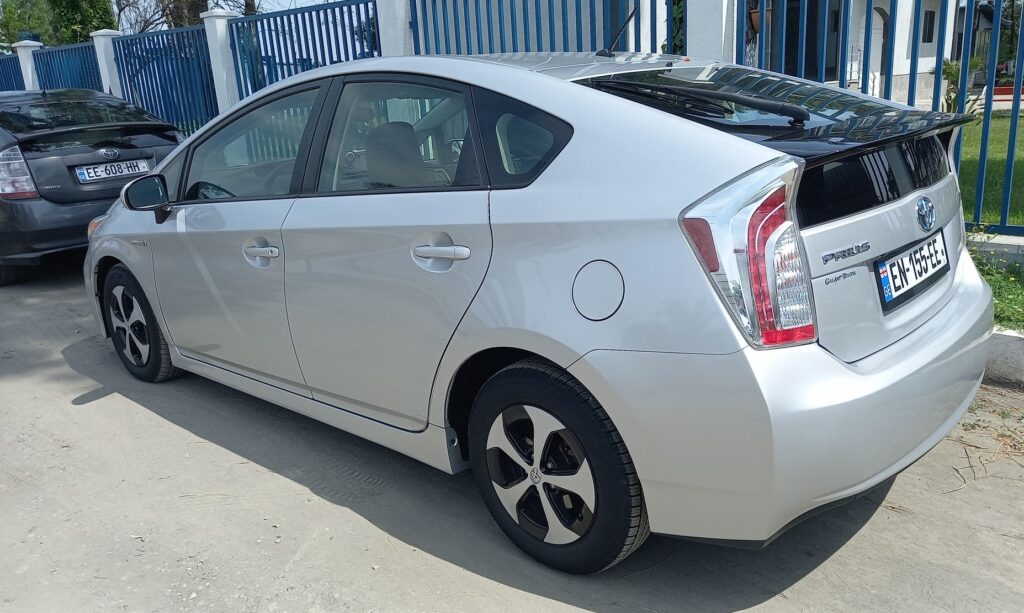
Unless you plan to go into the mountains, an SUV is unnecessary from spring through November. The cheapest Toyota Prius will work perfectly for driving across the country. In winter, however, rent a higher‑clearance vehicle, especially if you intend to leave the main highway and visit mountain areas.
Recommended Platform: Localrent
In practice, Localrent—an aggregator of local rental companies—has proven best. Why Localrent is more convenient:
- Prices 20–30% lower than international agencies
- Real car photos (you get exactly the vehicle you choose)
- Transparent terms with no hidden fees
- Pay a 20% advance online with any bank card; the rest in cash or with a foreign card upon pickup
- Deposit of $50–100, or sometimes no deposit at all
- No credit card required
- Insurance terms are clear and written in plain language
Important Considerations
- Rental and insurance conditions vary—check details for each specific car
- Many older vehicles; if you need a new one, use the model year filter
- In peak season, good options sell out 5–7 days in advance
Can You Pick Up in Tbilisi and Drop Off in Batumi?
Yes, you can rent a car in Tbilisi and then either return it in Batumi or drive back. A one‑way drop‑off in another city costs $80–100—this is standard practice worldwide. Through Localrent, you can arrange this easily. Such one‑way rentals are especially popular among travelers flying home from Batumi: rent in the capital, drive across the country, drop the car in Batumi, and relax at the sea. If your return flight is from Tbilisi, you can always come back by train.
Fuel Prices in Georgia 2026
Fuel prices fluctuate, roughly €1.2–1.4 per liter. Different gas stations offer different prices. As a guideline:
- 95 petrol: 3.6 GEL (€1.4)
- 92 petrol: 3.1 GEL (€1.2)
- Diesel: 3.04 GEL (€1)
- LPG: 1.5 GEL (€0.5)
A car consuming 6–8 liters per 100 km will need about 20–25 liters for the entire route.
Parking in Batumi
- Parking is generally simple:
- Free zones exist almost everywhere
- In the city center, paid parking costs from 1 GEL per hour (~€0.35)
- Many accommodations include parking
Pros and Cons
Pros of Car Rental
- No need to adapt to any schedule
- Comfortable (choose a car model that suits you)
- Insurance and luggage space included
- Freedom to make stops along the way
Cons of Car Rental
- Considering fuel, deposit, and one‑way fees, this becomes the most expensive option for a simple city‑to‑city trip
- City parking in Batumi is paid (10 GEL per day, 20 GEL per week; payment via mobile banking or a bank infokiosk)
- Challenging route for an unprepared driver (risky overtaking on narrow road sections possible)
- You must research good stopping points along the way yourself
Tbilisi–Batumi by Taxi
- Travel time: approximately 5.5 hours
- Cost: 350–450 GEL ($130–165 USD)
You can also get from Tbilisi to Batumi by taxi, booking through any mobile app. The service price is shown at the time of booking. Keep in mind that it may change depending on demand, time of day, and day of the week.
You can select a fare class and vehicle type (regular car or minibus). However, you cannot inspect the car’s condition in advance or know who your driver will be. Local drivers’ style can be aggressive and uncomfortable—especially for those unaccustomed to sudden braking and rapid acceleration.
We do not recommend choosing the cheapest economy fare. The interior condition of such cars is often poor. Drivers may smoke or play music that you might not enjoy. The road to Batumi is long and challenging; therefore, paying more is better than enduring several hours of discomfort.
Pros and Cons
Pros of a Taxi
- Can be ordered at any time
- Relatively fast
- More comfortable than a minibus (if you get a good driver and a decent car)
- Suitcases can go in the trunk (but if a gas cylinder is present, space may be insufficient—and you cannot check this beforehand)
Cons of a Taxi
- More expensive than other transport options
- No way to choose the driver or the specific vehicle
- Potential discomfort due to aggressive driving
- Driver might smoke, bring up unpleasant conversation topics, or play music you dislike
- Extra charges apply for stops and waiting time along the way
Transfer from Tbilisi to Batumi
In terms of cost, a transfer is nearly the same as a taxi—yet it is far more comfortable and predictable. Moreover, you can turn the trip into a mini‑tour.
If you are not ready to drive yourself but still want to see Georgia, book a Tbilisi–Batumi transfer with a local driver. Essentially, this gives you a personal driver for the entire day at a fixed price, with a decent car and the freedom to make stops along the road.
The most reliable options are gotrip.ge and kiwitaxi.ru. On these platforms, you can choose the car type, add stops along the route, and see the final price before booking. The journey usually takes 4 to 6 hours, depending on traffic and the number of stops. Prices start from 120USD and can reach 400 USD or more for comfortable minivans or premium‑class vehicles.
Why This Is Better Than a Regular Taxi
Unlike a random taxi, here is what you get:
- Pickup directly from your hotel, Tbilisi Airport, or any other Georgian city (Mtskheta, Telavi, etc.)
- No haggling or negotiating over price
- The driver waits at stops as long as you need—no time restrictions
- The ability to plan your route in advance
- Stops Along the Road (The Main Advantage)
The most valuable feature is avoiding five consecutive hours of driving. Instead, you can break up the trip. On the way from Tbilisi to Batumi, convenient stops include:
- Mtskheta and Jvari
- Gori and Uplistsikhe
- Borjomi
- Kutaisi (canyons, caves, monasteries)
A Tour en Route to Batumi
This option is perfect for travelers who want to get the most out of the journey between cities. Local guides arrange a comfortable transfer and offer several route options, showcasing both natural sites and cultural attractions along the way.
Below are the most popular sights worth including in your itinerary from Tbilisi to Batumi:
Uplistsikhe Cave Complex. Over a hundred rooms carved into rock have survived here, dating back to Antiquity and the Middle Ages.
Kutaisi. Georgia’s first capital. A colorful city with authentic streets, historic architecture, and majestic medieval churches.
Borjomi. A famous balneological resort where people come to drink the renowned mineral water and bathe in thermal springs.
Martvili Canyon. A narrow corridor between high, winding cliffs that the Abasha River has carved over millennia. You can take a boat through the gorge or walk along a stone path beside the river—either way, magnificent views await.
A transfer‑excursion from Tbilisi to Batumi that includes several sights typically takes 9 to 12 hours, depending on the chosen route. However, for a relaxed, in‑depth exploration of each location, we recommend turning the trip into a multi‑day tour.
How Much Does a Tbilisi–Batumi Transfer Cost
- Price: from €120 per vehicle
- Travel time: 4.5–5 hours
- Capacity: comfortable for 2–4 people
Pros and Cons
Pros of a Transfer
- Door‑to‑door service
- Opportunity to stop along the way (e.g., in Gori or Kutaisi)
- Independent of schedules; you can depart at any time
Cons of a Transfer
- Higher cost than a train or minibus
- Not all drivers speak English—however, this service can be added to your order
Frequently Asked Questions
How long does the high‑speed train take from Tbilisi to Batumi?
To answer directly: about 5 hours and 12 minutes. For this reason, the train is considered one of the most convenient solutions. The journey is long but quite calm—free from traffic jams and the constant stops typical of buses and minibuses.
How long does the bus take from Tbilisi to Batumi?
Buses and minibuses generally take longer. Plan for roughly 6–7 hours on average, sometimes more if traffic is heavy, extra stops occur, or travel happens during peak season. Actual travel time can differ even between similar services, as much depends on the carrier and road conditions.
How long does the drive take by car, taxi, or transfer?
By car, taxi, or transfer, the trip usually takes about 5–6 hours. This option offers great flexibility: you choose your departure time, make stops whenever you like, and arrive directly at your desired address. However, there is a trade‑off—everything depends on traffic, weather, the driver’s pace, and your departure time from Tbilisi.
Where can I buy tickets for the high‑speed train from Tbilisi to Batumi?
Buying tickets online in advance is the most convenient method. This is especially important during summer, on weekends, and for popular dates when good seats sell out quickly. Advance purchase also lets you see carriage classes, available seats, and exact departure times. If sticking to a specific schedule matters to you, do not leave booking until the last moment.
Where does the train depart from and arrive at?
The train departs from Tbilisi’s central railway hub and arrives at Batumi’s railway station. For tourists, this is convenient: the logistics are clear, the route is easy to check beforehand, and after arrival you can take a taxi or public transport to your hotel. Compared to minibuses or obscure pickup points used by some carriers, the railway wins on clarity alone.
What should I know before traveling by train?
Arrive at the station early, especially if it is your first time, you have luggage, or it is high season. Avoid bringing excessive baggage unnecessarily, though the train handles normal tourist luggage far better than a minibus. For more comfort, choose a higher class of seating. If your goal is simply a calm ride, standard class usually suffices.
How can I get from Tbilisi to Batumi cheaply?
The cheapest method is usually the minibus. This suits travelers willing to accept modest comfort in exchange for minimal expenses. It works well for backpackers with little luggage and no special expectations for onboard convenience.
What is the most convenient way to travel from Tbilisi to Batumi?
For most tourists, the high‑speed train is the most convenient option. It combines clear logistics, advance ticket purchases, a calmer journey, and a decent level of comfort. If you prefer not to deal with the nuances of local transport, the train is typically the simplest solution.
What is the fastest way to travel from Tbilisi to Batumi?
Looking only at pure travel time (excluding transfers and waiting), taxis, transfers, or driving yourself are often the fastest. However, once you factor in traffic jams and road unpredictability, the high‑speed train remains one of the most time‑stable options.
What should a tourist without a car choose?
If you are traveling independently around Georgia and choosing between the train, bus, or minibus, start with the train. It is the best option for first‑timers. Consider the bus if you want a balance of price and comfort. Choose the minibus only if your priority is saving money and you are ready to accept less comfortable conditions.
Conclusion
You can get from Tbilisi to Batumi in several ways, and the best choice depends on your priorities: minimum cost, high speed, comfort, or complete freedom on the road. For most tourists, the high‑speed train stands out as one of the most convenient solutions. It offers clear logistics, decent comfort, and predictable travel time.
If door‑to‑door service matters most, look toward a taxi or transfer. To save money, choose the bus or minibus. Meanwhile, if you want to make the journey part of your travel experience without depending on any schedule, renting a car makes perfect sense. The main thing is deciding in advance what matters more to you: price, comfort, or route flexibility. With that decision made, the trip from Tbilisi to Batumi will go smoothly and without unnecessary complications.
In a land of majestic snowy peaks and emerald highlands, even a simple journey from point A to point B turns into a real adventure. Finally, to miss nothing of interest along the way, take such a trip in the company of local guides.