Warm, cheerful, colorful, hospitable, welcoming—travelers describe Tbilisi with all these words and dozens more enthusiastic epithets. The capital of Georgia is a city with an ancient history, deep-rooted traditions, and an incredible kaleidoscope of sights and entertainment. Read our guide to find out what to see, what to do, and where to go in Tbilisi first.
- History
- 2–3-Day Routes in Tbilisi
- When to Go
- Where to Take Photos
- 2–3-Day Shopping
- 7 Reasons to Visit
- Tours in Tbilisi
- Where to Stay
History
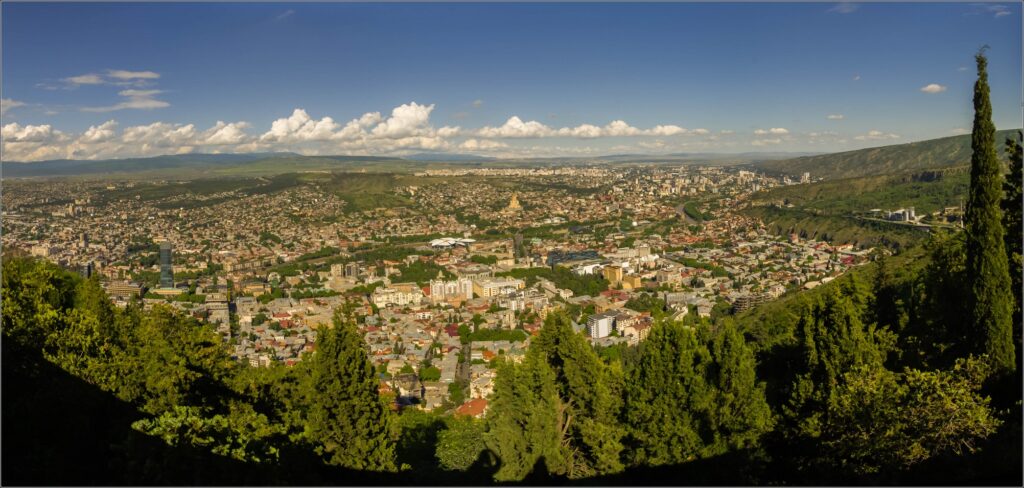
According to historical records, Tbilisi is about 2,000 years old. Most likely, the first settlement on the site of the future capital appeared at the beginning of the Common Era as a Roman camp. Archaeologists have discovered the ruins of ancient baths with beautiful mosaic panels near natural hot springs. Today, this area is home to the historic Abanotubani district with its bath complexes.
According to another legend, the city was founded in the 5th century by the King of Iberia, Vakhtang Gorgasali. It is believed that the king was hunting in a dense forest, shot a pheasant, and discovered the hot springs. He decided to use this natural resource for the benefit of the people—and at the same time founded a city, naming it Tbilisi, which in the local dialect meant “warm place.”
The city grew and developed rapidly. Soon, its wealth attracted invaders, and it was repeatedly ravaged by Arab, Mongol, and Turkish armies. In the early 19th century, Georgia became part of the Russian Empire, and Tbilisi—then known as Tiflis—became the administrative center of the Caucasus. Its beauty and unique atmosphere attracted writers and intellectuals such as Alexander Pushkin, Mikhail Lermontov, Leo Tolstoy, and Alexander Griboyedov.
Along with them came the early era of tourism. Travelers were drawn to Tbilisi in both the 19th and the 21st centuries. Today, visitors come for its authenticity—the unique blend of Old Town atmosphere, modern infrastructure, and contemporary design. You can easily spend an entire vacation here or use the city as a base for exploring the rest of the country. The capital offers museums, theaters, ancient temples, elegant mansions, and hundreds of excellent restaurants and entertainment options. Visit Tbilisi, and you’ll likely become one of its many admirers.
A 2–3-Day Walking Tour of Tbilisi
A long weekend is a great way to explore the Georgian capital. You’ll have enough time to see the main sights, visit a bathhouse, explore a museum, and try authentic khachapuri.
Route 1 — From Narikala Fortress to the Courtyards of Sololaki
On the first day, climb up to Narikala Fortress, explore the historic bathhouses, and walk through some of the most atmospheric neighborhoods in the city.
Narikala Fortress
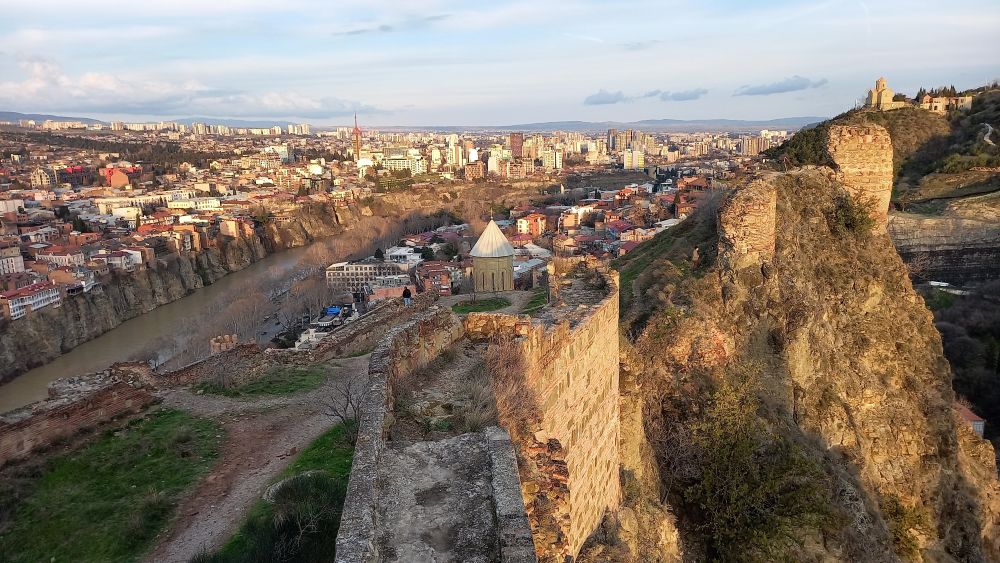
High above the city stands the ancient Narikala Fortress. Its walls have witnessed nearly every major event in Tbilisi’s history, and it may have existed even before the city itself. The exact date of construction remains unknown. Some historians believe that Vakhtang Gorgasali built or expanded the fortress while establishing his capital below.
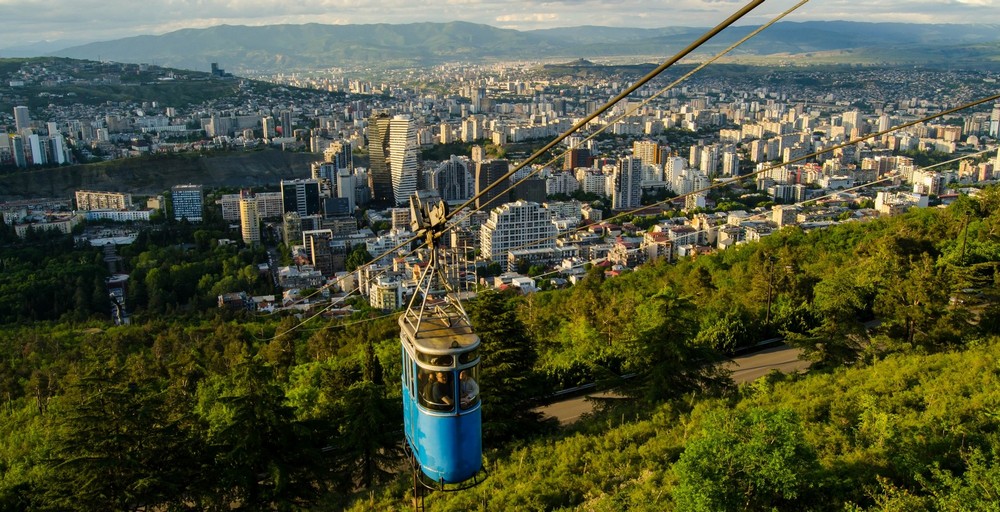
The fortress walls have been well preserved, and the Church of St. Nicholas has been restored within the complex. You can reach the site on foot via narrow, winding streets or take the cable car from Rike Park. From the observation decks, you’ll enjoy panoramic views over the city. Plan to spend 2–3 hours here at a relaxed pace.
Abanotubani District
From the fortress, head down into Abanotubani—the historic heart of Tbilisi. According to legend, this is where the city’s story began. The area is known for its sulfur baths and distinctive atmosphere.
For centuries, locals and visitors have appreciated the healing properties of the thermal waters. During the Middle Ages, domed bathhouses were built here in a style reminiscent of Eastern hammams. The most striking is the Orbeliani Bathhouse, also known as the Tiled Bathhouse, with its ornate façade and minaret-like towers. Alexander Pushkin once praised these baths, calling them among the most luxurious he had ever seen.
The Fig Gorge
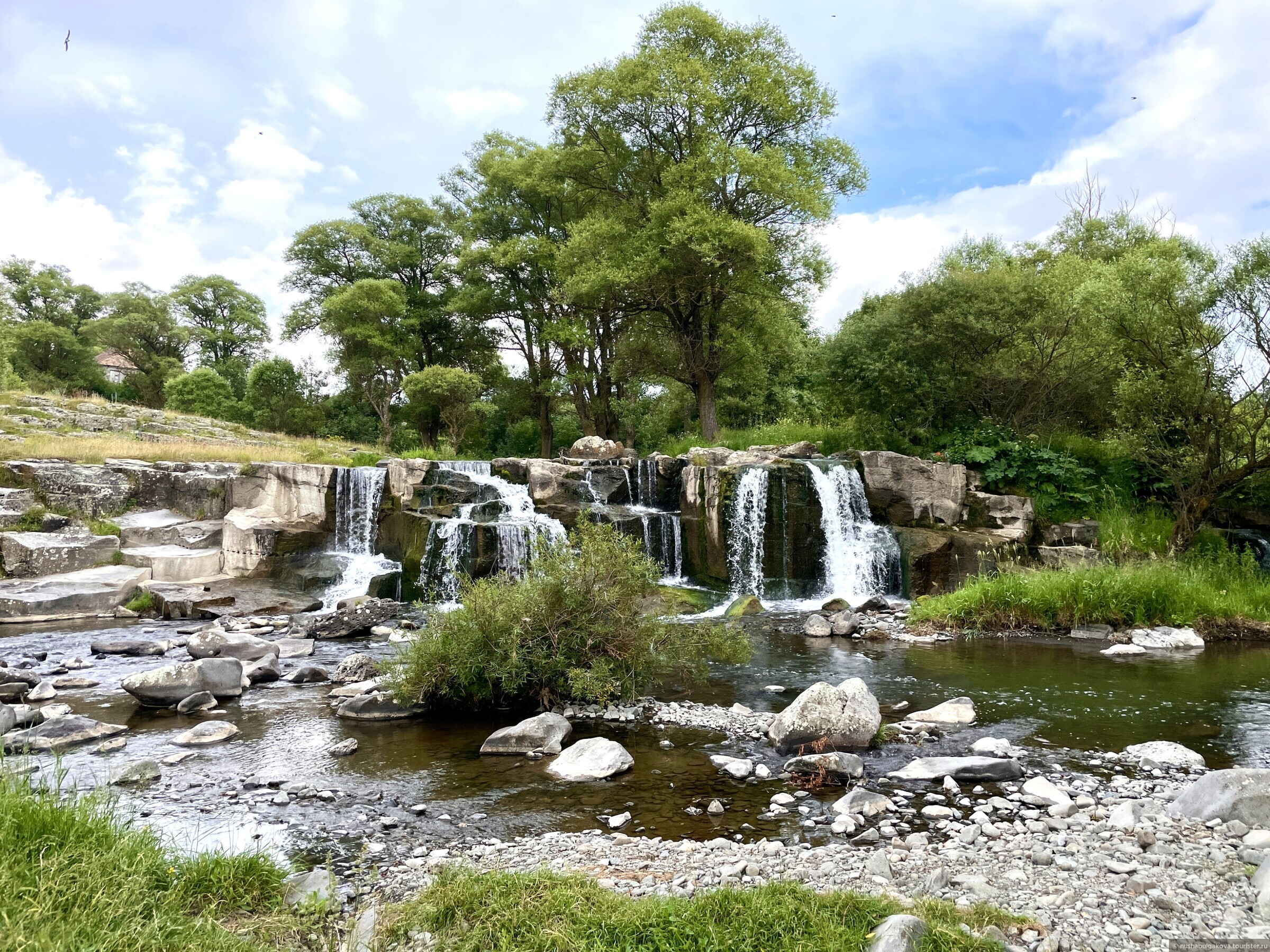
Next to the baths lies the picturesque Fig Gorge, also known as Legvtakhevi. It follows the course of the Tsavkisistskali River and has been equipped with walking paths and rest areas. This natural corner in the center of the city offers a refreshing escape on hot days and a pleasant walk at any time of year. The trail leads to the scenic Legvtakhevi Waterfall.
Legvtakhevi Waterfall
The Tsavkisistskali River flows through the Tbilisi canyon, forming a picturesque waterfall that feels far removed from the noise of the city. It’s a refreshing natural escape without ever leaving Tbilisi.
The best time to visit is in spring, during the snowmelt season, when the waterfall is at its fullest and most powerful. However, a walk through the gorge to admire the scenery is available year-round and is completely free.
Tbilisi Botanical Garden
Another natural highlight of the city is the Botanical Garden. It’s an excellent place for a relaxed walk in the historic center, with lush greenery, bridges, and around 4,500 plant species from across the globe.
The garden is divided into themed sections and walking trails. Here, you can explore coniferous and deciduous plants, native Caucasian flora, and exotic species. Spring is the best time to visit, when everything is in bloom.
Mother Georgia
After your walk in the Botanical Garden, head toward the iconic Mother Georgia monument. This 20-meter-tall aluminum statue was designed by Georgian sculptor Elguja Amashukeli.
In one hand, she holds a sword to defend the country from enemies; in the other, a bowl of wine to welcome guests. One of the best views of the monument opens from the historic Sololaki district.
Sololaki District
Sololaki is one of the most authentic and photogenic areas of Tbilisi. Most buildings here are 100–200 years old. This is where you’ll find classic Tbilisi courtyards with laundry hanging between balconies, ornate facades, and grand entrance halls from the imperial era.
Inside the dimly lit entryways, you can still see bas-reliefs, marble staircases, wrought-iron railings, and old murals. The district is full of colorful stained-glass windows, carved wooden balconies, and decorative stucco details.
To fully experience the atmosphere, consider staying in a guesthouse here and immersing yourself in the unique spirit of the city.
Route 2 — Old Tbilisi and Its Treasures
Enjoy a relaxed walk through the historic streets, exploring landmarks and tasting local cuisine along the way.
Old Tbilisi
The historic center of the city is known as Old Tbilisi. This is where most of the key architectural and cultural landmarks are concentrated.
The narrow streets preserve a medieval layout, and many buildings are centuries old. The area stretching from Pushkin–Baratashvili Street to the Kura River and the Sololaki Ridge—including the bath district and Narikala Fortress—is commonly referred to as Old Tbilisi.
Despite its compact size, you can easily spend a full day—or more—exploring it. Since 2007, parts of the Old City have been included on the UNESCO Tentative List of World Heritage Sites.
“Dancing Georgians” Sculpture
The sculptural composition known as “Dancing Georgians” (Berikoba) is often considered the unofficial entrance to Old Tbilisi. It was installed in 1981 based on a design by sculptor A. Monaselidze.
This lively and expressive piece always draws attention—many visitors can’t resist taking photos or even mimicking the dance poses.
Rezo Gabriadze Puppet Theater
From here, walk along Shavteli Street to the famous puppet theater founded by Rezo Gabriadze. Since 1981, unique performances have been staged here, attracting audiences from around the world.
Next to the theater, you’ll find a cozy café and the iconic Clock Tower, which hosts a small show twice a day. The colorful tiles were painted by Gabriadze himself, and his motto is written in gold on the pediment: “May our tears come only from cutting onions!”
If you plan to attend a performance, it’s best to book tickets in advance.
Anchiskhati Church
Nearby stands the oldest surviving building in Tbilisi—the Anchiskhati Church, also known as the Church of the Nativity of the Virgin Mary. This 6th-century basilica was built between 522 and 534, according to historical records.
The church remains active today and houses ancient frescoes and icons. It is open to visitors daily and free of charge.
Peace Bridge
Continue your walk along Irakli II Street, passing traditional cafés and shops, toward the modern Peace Bridge. This pedestrian bridge over the Kura River connects the Old Town with Rike Park.
Built in 2010, the bridge is 156 meters long and features a glass-and-steel design supported by four pillars. During the day, it serves as a convenient crossing. At night, it becomes one of the most photogenic spots in the city thanks to its illumination.
Sioni Cathedral
Let’s return to the Old Town and walk down Sioni Street to Sioni Cathedral—one of Georgia’s most important religious sites. King Vakhtang founded the cathedral, and builders completed the stone structure in the 7th century. Sioni remains Tbilisi’s main historic church and served as the cathedral of the Georgian Catholicos until 2004. Over the centuries, invaders destroyed and rebuilt it many times. Craftsmen later restored its frescoes, iconostasis, and interior decoration.
Monument to the Tamada
From the church, we stroll along the pedestrian street to Sioni Square, where the Monument to the Tamada stands at the center of the historic quarter. This Tamada is a replica of a bronze figurine from the 7th century BCE. The original stands in the National Museum of Georgia. The monument highlights the ancient roots of Georgian winemaking and hospitality.
Metekhi Cathedral
From the café terrace, you can enjoy views of the Kura River embankment, the Metekhi Bridge, and Metekhi Cathedral. The cathedral rises above the river and has watched over the city for 800 years. In the Middle Ages, Metekhi Castle stood here with a royal palace and fortress walls. Builders constructed the church in the 13th century, and people rebuilt it many times after destruction. Today, visitors can enter freely and admire its stone carvings and icons. The observation deck next to the church stays open 24/7.

Route 3 — From Rustaveli Avenue to Agmashenebeli Avenue
Today we stroll along Tbilisi’s grand boulevards and see the city from its most spectacular side, including from above.
Rustaveli Avenue
Let’s start on Rustaveli Avenue, the main street of the Georgian capital. It stretches for 1.5 kilometers and features many landmarks, so you won’t walk it quickly. By the mid-19th century, the avenue took on its modern form. It originally bore the name Golovinsky, after a tsarist governor, and included Palace Street and the avenue itself. In 1918, the city renamed it after a famous Georgian medieval poet. Today, the avenue offers churches, theaters, palaces, cafés, shops, and hotels. One highlight here is the National Museum of Georgia.
National Museum of Georgia
The National Museum of Georgia is the largest museum in the country. The Caucasus Department of the Russian Imperial Geographical Society founded it on May 10, 1852, and named it the Caucasus Museum. In 1919, officials renamed it the Museum of Georgia. The museum now occupies several buildings in central Tbilisi, with its main collection on Rustaveli Avenue. Architects designed the main building in 1910. Today, it houses the most valuable exhibits, including ancient artifacts, coins, ceramics, jewelry, icons, and rare books. Plan to visit in the morning and allow 3–4 hours.
The Tbilisi Funicular
You can easily walk from the museum to the Tbilisi Funicular. This historic landmark connects the city center with Mtatsminda Mountain. Opened in 1905, it quickly became one of the most beautiful funiculars of its kind. During the Soviet era, authorities built a large park complex here with rides, cafés, and a planetarium. The funicular has three stations: lower, middle, and upper. Travelers recommend riding to the top first to enjoy the views and have lunch. Then head down to the middle station to visit St. David’s Church and the Pantheon of Public Figures.
David Agmashenebeli Avenue
Let’s head to the lower station of the Tbilisi Funicular and return to Rustaveli Avenue. From there, we walk to the Galaktion Tabidze Bridge and reach the Chugureti district within minutes. One of its main highlights is David Agmashenebeli Avenue. This stylish promenade quickly gained popularity among both visitors and locals.
In the mid-19th century, people called it Mikhailovsky Avenue in honor of Tsarevich Mikhail. Today, it bears the name of David IV of Georgia, also known as David the Builder, who united the country.
Baroque, Gothic, and Art Nouveau styles mix with Eastern motifs and Georgian balconies. Theaters, 19th-century mansions, and old apartment buildings line the avenue. Cafés and souvenir shops create a lively atmosphere. It’s a great place to celebrate your first visit to Tbilisi and discover spots for future trips.
When to Visit Tbilisi
Travelers often say you can visit Tbilisi anytime. The city welcomes tourists all year thanks to its mild climate.
Winter stays relatively warm, with temperatures around 5–7 °C and mostly dry weather. Spring arrives early and brings sunshine. In March, temperatures reach 10–12 °C, while April sees 15–17 °C.
Summer starts in May and lasts until October. The weather turns hot and sunny, especially in July and August, when temperatures can reach 40 °C. Many travelers prefer visiting in September or October. Autumn brings harvest season, fresh grapes, and festivals.
Where to Take Photos in Tbilisi
Tbilisi offers countless photo spots. You’ll find them on almost every street.
Visit the domed bathhouses in the Abanotubani district or explore the picturesque streets of Sololaki. Walk through courtyards with hanging laundry and balconies covered in grapevines. For the best shots, go early in the morning before crowds appear.
The streets of Old Tbilisi feature beautiful facades, while cafés near Narikala Fortress offer panoramic terraces. The fortress itself provides stunning views, massive walls, and dramatic ruins.
Photographers often return in the evening to capture the city lights. For great angles, head to the left bank of the Kura River or Metekhi Hill at sunrise. Another excellent location is Agmashenebeli Avenue, which looks beautiful both in the daytime and sunset.
Nature lovers should visit the Tbilisi Botanical Garden in spring. You can also search for blooming wisteria on the streets of Old Tbilisi—these lilac flowers decorate balconies and facades.
Shopping in Tbilisi for 2–3 Days
Tbilisi is a great destination for shopping. You’ll find carpets, spices, sweets, and traditional crafts.
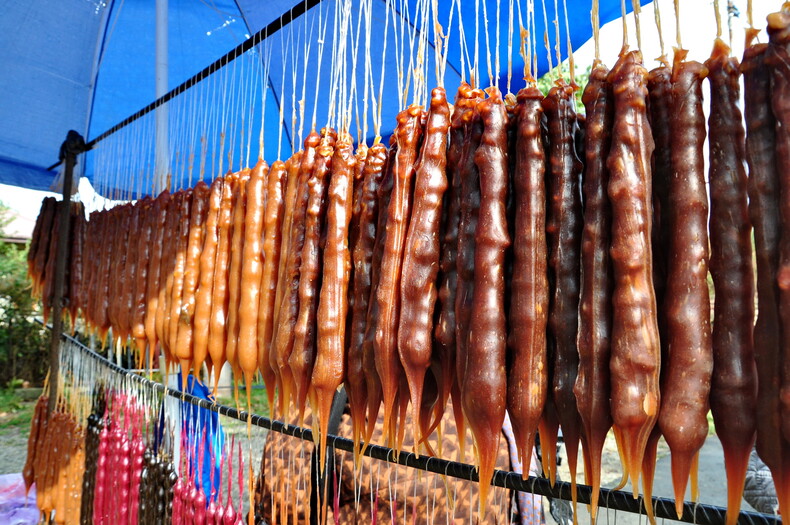
Start with the Deserters’ Market near the railway station. Here, vendors sell fresh herbs, vegetables, fruits, nuts, and local sweets at good prices. Don’t miss churchkhela—nuts coated in thick grape syrup. Try local cheeses and adjika, and ask vendors to mix spices for you.
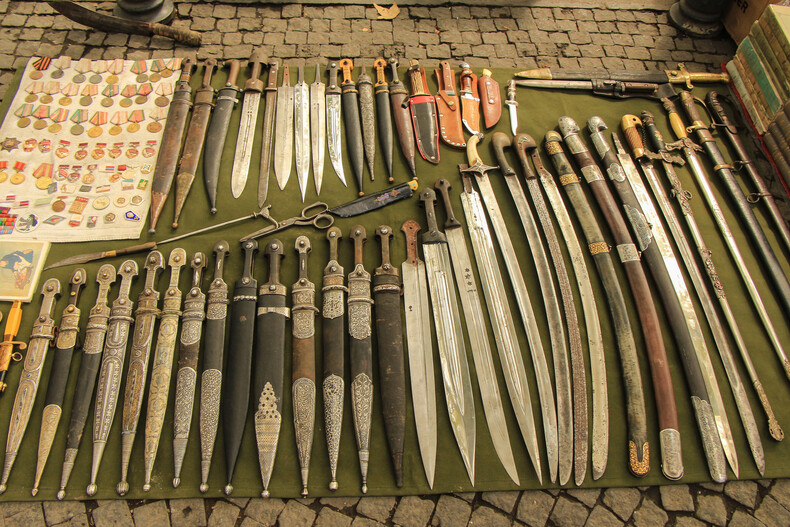
For unique souvenirs, visit the flea market on Sukhoy Bridge (Dry Bridge). You’ll find antiques, handmade goods, and unusual items. Georgian designer boutiques offer clothing and elegant jewelry.
Souvenir shops across Old Tbilisi sell ceramics, wooden crafts, textiles, and decorative items. You can also buy engraved weapons, chess sets, and backgammon.
No trip is complete without Georgian wine. Buy classic varieties like “Tsinandali” and “Kindzmarauli” in supermarkets. For something special, visit wine shops and cellars in Old Tbilisi. There, you can taste unique local wines and discover small producers.
7 Reasons to Visit Tbilisi
- Get lost in the narrow streets of Old Tbilisi—a city that remembers Alexander Pushkin and Alexander Griboyedov, Russian tsars, and Persian khans. Admire carved balconies, massive doors, and a street layout that dates back to the Middle Ages.
- Climb up to Narikala Fortress on foot or by cable car. Walk along its ancient walls and towers, greet the Mother of Georgia monument, and enjoy panoramic views over the city.
- Take a ride on the Tbilisi Funicular. It’s both a fun attraction and a historic landmark. From the upper station, you’ll see churches, the river, and entire neighborhoods spread out below.
- Visit the National Museum of Georgia. You’ll find ancient human remains, the legendary gold of Colchis, and works by Niko Pirosmani. Come in the morning and allow enough time—the museum is large and rich in exhibits.
- Visit a bathhouse in the Abanotubani district, where the city’s history began. Choose a simple public bath or a private room with a marble table and personal service.
- Learn how to eat khinkali and khachapuri the right way—with your hands. Visit local cafés and restaurants to understand the difference between Imeretian and Adjarian khachapuri and to find the perfect wine pairing.
- And, of course, taste Georgian wine. Travel to the Kakheti region—the birthplace of Georgian winemaking—or visit wine houses in Tbilisi. Choose places that offer tastings and try different varieties before buying.

Excursions in Tbilisi
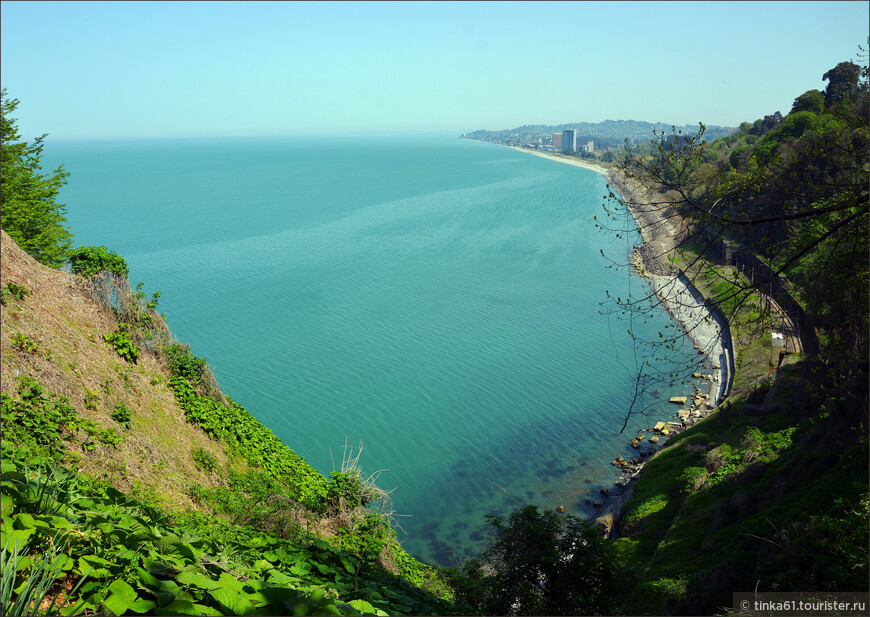
Tbilisi serves as a great starting point for trips across Georgia. From here, you can easily reach the sea, mountain regions, ancient fortresses, vineyards, and cave cities.
Even for city walks, consider hiring a local guide. This is especially useful if you have limited time. A guide will show you hidden spots and recommend good cafés and restaurants.
Where to Stay in Tbilisi
Tbilisi offers a wide range of accommodation options. You can choose anything from budget hostels to traditional guesthouses or modern international hotels.
For a short stay, book accommodation in central districts such as Avlabari, Abanotubani, or Sololaki. Prices are slightly higher, but most attractions will be within walking distance.