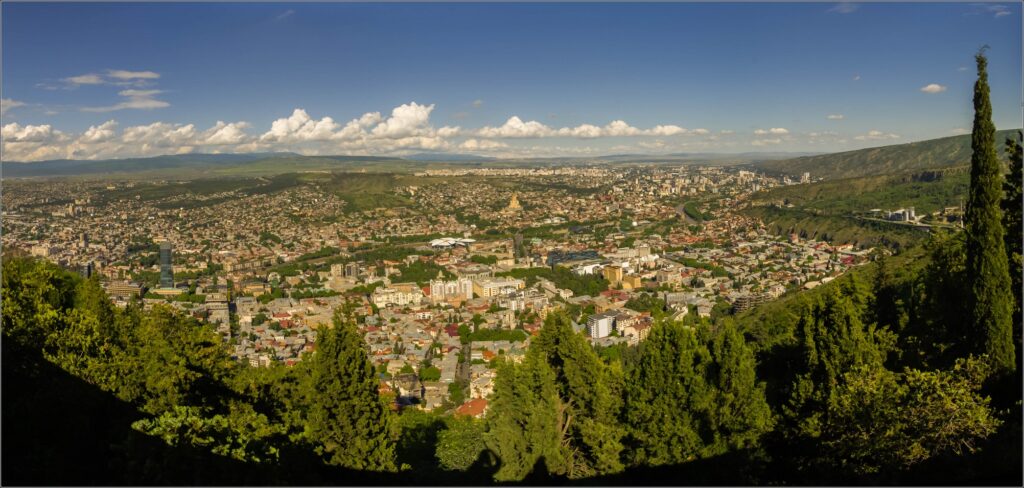
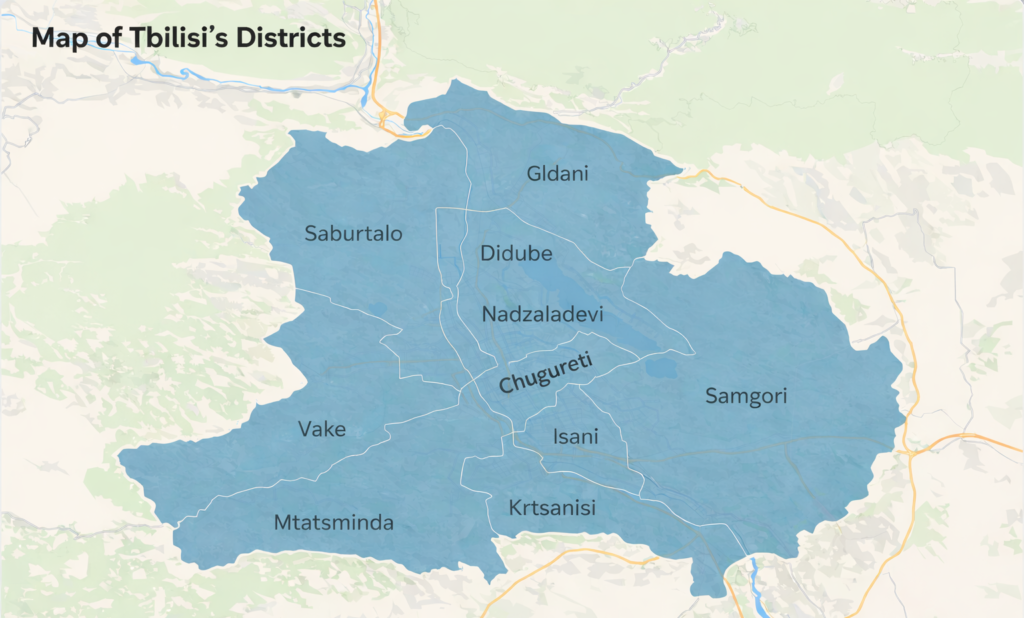
Tbilisi is the largest city in the country, with a population of around 1.33 million in 2026. When choosing where to stay, travelers consider several factors, including prices, transport access, and proximity to metro stations. The capital consists of ten districts, each with its own character.
In a nutshell
Overall, these districts differ not only in architecture but also in landscape and atmosphere. Moreover, the areas where travelers and expats usually settle feel very distinct from one another. For example, you won’t confuse the modern cafés, boutiques, and high-rises of Vake and Saburtalo with the historic charm of the Old Town, including Kala and Abanotubani. At the same time, Sololaki and Chugureti, both built more than a century ago, also differ noticeably in architectural style.
In some parts of Tbilisi, life feels lively and bustling. Street vendors invite you to try khinkali or freshly baked lavash on nearly every corner. In contrast, other neighborhoods offer a calmer atmosphere, with green spaces and quiet courtyards where you can relax and recharge.
Among all districts, Saburtalo provides one of the best balances between housing costs, infrastructure, and location. Next comes the prestigious Vake district, followed by the central area of Mtatsminda. Meanwhile, those who prefer quieter residential neighborhoods with basic infrastructure should consider Isani, Didube, or Chugureti. However, other districts may be less convenient due to weaker transport connections and limited infrastructure.
In this Tbilisi districts guide, you’ll find a detailed overview of the best and less convenient neighborhoods in the Georgian capital. We’ll look at their locations, key features, and how they compare in terms of transport, infrastructure, housing, and entertainment.
One important note: this overview focuses on tourist-oriented districts. Administratively, the divisions differ slightly. For instance, the Mtatsminda district includes several well-known neighborhoods, such as Vera, Sololaki, and the Old Town.
| Mtatsminda | stunning city views, beautiful photos, atmospheric walks |
| Vake | charm with comfort and prestige, lively streets |
| Chugureti | captivates with European-style architecture, atmospheric |
| Old Town | atmospheric city views, beautiful photos, old charm |
| Saburtalo | top comfort and a lot of convenience and infrastructure |
| Isani, Didube | affordable housing near key markets and transport hubs |
| Gldani, Nadzaladevi, Samgori | low prices for rent, less convenience and infrastructure |
Tbilisi Old Town
Distance to the center: 0 minutes — you are already here.
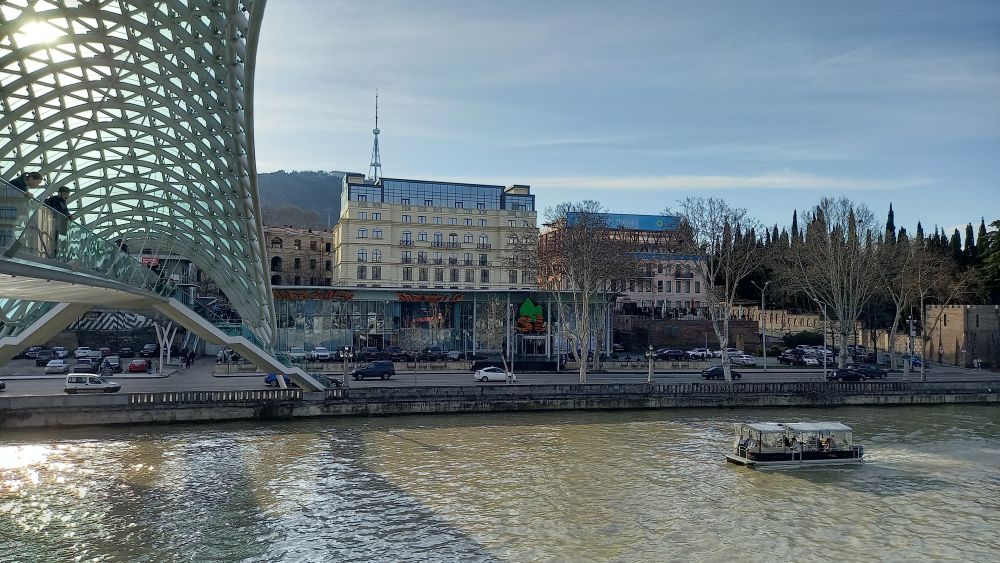
The Old Town serves as the main tourist hub, filled with souvenir shops, historic churches, and lively streets. For instance Kote Apkhazi Street (formerly Leselidze) buzzes with activity, while the Abanotubani sulfur baths attract visitors year-round. As in most historic centers, the advantages come with trade-offs: the area gets noisy at night, and much of the housing stock is quite old. Nevertheless, staying here means you’re within walking distance of nearly all major attractions.
As you wander through the narrow streets, the atmosphere of an ancient settlement becomes especially vivid. At every turn, architectural landmarks invite you to pause and take a closer look. Located on the right bank of the Kura River, this district forms the historical heart of Tbilisi. In fact, the city began to take shape here in the 5th century. Over time, however, repeated invasions devastated the area. The most destructive attack occurred in 1795, when Persian troops nearly destroyed Tbilisi. Yet, by the early 19th century, the city had been rebuilt within its original boundaries.
Today, the center impresses with its contrasts. Elegant mansions stand next to small houses with carved balconies, while monasteries standing close to the shops and atmospheric cafés. In addition, the infrastructure here is well developed: public transport runs regularly, and restaurants, hotels, and shops operate everywhere.
You can find something interesting on almost every street. However, several landmarks stand out as must-sees. Among them are the Botanical Garden and Narikala Fortress, built in the 5th century on a high cliff. The 12th-century Sioni Cathedral and the 6th-century Anchiskhati Church — the oldest surviving building in the city — also deserve attention. Finally, the sulfur baths remain one of the district’s main highlights. According to legend, the hot springs rich in hydrogen sulfide not only led to the founding of the city but also inspired its name: “Tbilisi” translates as “warm city.”
Where to go for fun
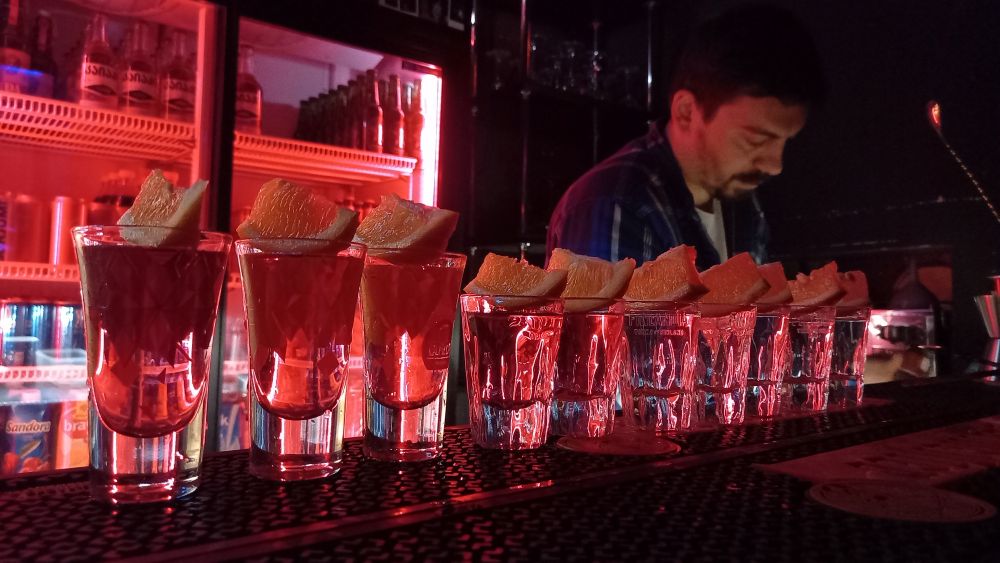
To start the evening, head to a jazz performance at the Singer bar or enjoy a show at the Gabriadze Theater. Afterward, you can stop by Moulin Electrique, tucked into a synagogue courtyard, for a couple of cocktails. Then, continue to Shardeni Street, where you’ll find hookah lounges and lively bars. Later, dance the night away at one of the clubs, grab khinkali at “Maspendzelo,” and, if you’re feeling adventurous, finish with a morning visit to the sulfur baths. Even famous visitors like Alexandre Dumas, Alexander Pushkin, and Sergei Yesenin once enjoyed the city’s vibrant atmosphere — so why not follow their example?
Where to spend your money
- Across from the Radisson Blu Iveria Hotel, you’ll find a cozy bookstore called Itaka Books, perfect for a quiet browse.
- If you’re searching for antiques or unique finds, head to Dry Bridge Market, known locally as Sukhoi Most — a favorite spot for vintage treasures.
- Finally, don’t miss the chance to try fresh churchkhela along Kote Apkhazi Street, one of the liveliest streets in the Old Town.
Avlabari
Distance to the city center ranges from 5 to 15 minutes, depending on the exact location within the district.
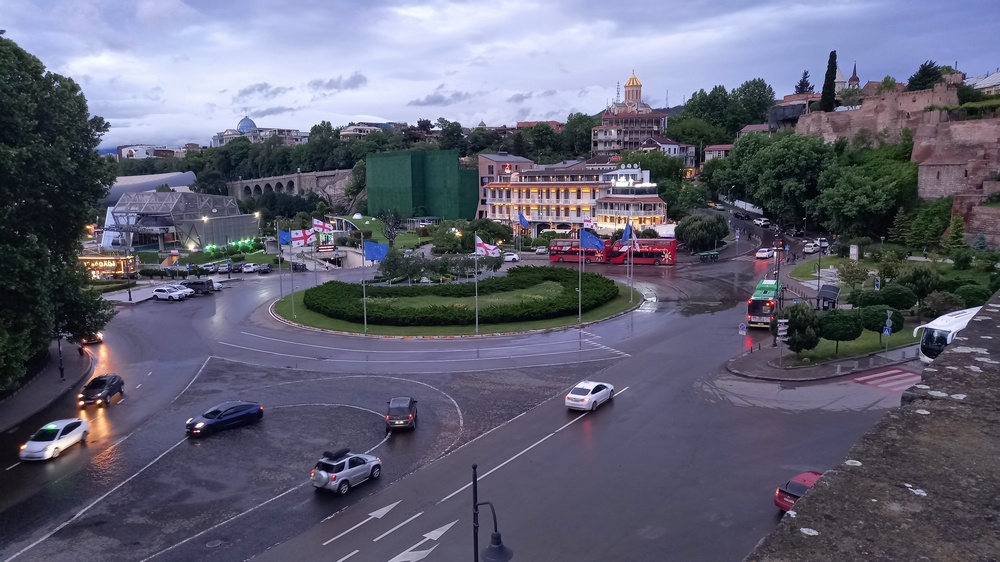
This distinctive part of Tbilisi lies on the rocky left bank of the Kura River. Originally, it existed as a separate settlement; however, over time, it gradually merged with the expanding city. Armenians have long formed a significant part of Avlabari’s population, having settled here as early as the 11th–12th centuries. Although the district sits just across the river from the Old Town—connected by the Mira, Metekhi, and Nikolai Baratashvili bridges—accommodation here is generally more affordable. Still, for a fuller experience, most visitors cross to the right-bank center.
That said, Avlabari offers several noteworthy attractions of its own. Most importantly, the district is home to Georgia’s largest church, visible from almost anywhere in the capital. The Holy Trinity Cathedral, also known as Tsminda Sameba, stands on a high hill and dates back to 2004. Notably, the structure rises to 101 meters, making it just slightly shorter than St. Isaac’s Cathedral in St. Petersburg. Inside, the cathedral may appear austere at first glance; nevertheless, gilded elements, mosaic flooring, and elegant chandeliers create an overall sense of grandeur.
Meanwhile, another important landmark—though much smaller—is the Metekhi Church. Perched dramatically on a cliff above the river, it occupies the site where a royal palace once stood. Although the original 12th-century structure was destroyed, the current building dates from the 17th century. Nearby, an observation deck opens up impressive views of the historic center. In addition, Rike Park offers a pleasant place to walk, frequently hosting concerts and exhibitions. From here, you can also take the cable car up to Narikala Fortress.
Entertainment and Food
Avlabari features many small hotels and apartments, most of them located in older buildings. However, while accommodation options are plentiful, quality breakfast spots remain limited. For a more refined experience, the Sheraton Hotel offers several restaurants serving both international cuisine and fine wines.
Alternatively, head to In the Shadow of Metekhi: if you reserve a table in advance, you’ll enjoy not only excellent—though relatively expensive—food but also stunning terrace views. On weekends, live music and dancing further enhance the atmosphere.
Finally, newer hotels such as Brim and Hedi stand out thanks to their rooftop restaurants, where guests can dine while overlooking the Kura River.
Sololaki
Distance to the city center: up to 10 minutes on foot.
Just beyond Freedom Square, Sololaki unfolds as a network of charming historic streets. Here, numerous bars operate, and new ones continue to appear, giving the area a lively, evolving feel. At the same time, the absence of high-rise buildings means you’ll likely stay in a traditional house with a classic Georgian courtyard. On the downside, older infrastructure may lead to occasional issues with plumbing, heating, or electricity.
Historically, the district developed rapidly in the 19th century, when wealthy residents chose it as their preferred neighborhood. Consequently, streets filled with elegant mansions in Neo-Renaissance, Neo-Gothic, Art Nouveau, and Neo-Baroque styles. Today, these same streets attract photographers and architecture enthusiasts. Although many buildings were later converted into communal apartments during the Soviet era—and some decorative elements were lost—much of the original charm remains.
Unlike the Old Town, Sololaki lacks major landmark attractions. Nevertheless, this is precisely what makes it appealing: here, visitors can observe everyday local life in an authentic setting. In fact, the district’s main draw lies in its atmosphere, as well as in its richly detailed architecture.
For example, Galaktion Tabidze Street deserves special attention. House No. 18, built in 1911 for the Seilanov industrialists, features a marble floor and wall paintings depicting different parts of the world. Meanwhile, No. 21—the residence of Evelina Ter-Akopova (1896)—impresses visitors with its preserved ceiling frescoes, cast-iron staircase, and elegant wrought-iron lamppost.
Unique Activities
If you’re staying in Sololaki, consider taking a short trip to the nearby village of Kojori. You can catch bus 380 or 316 and then hike back downhill—a scenic route that typically takes three to four hours.
Food and Bars
For breakfast or dessert, start at Baba Bakery, known for its delicate pastries and mandarin marmalade inspired by French recipes. Meanwhile, the area around Lado Asatiani Street remains the main nightlife hub, especially on weekends.
Among the standout spots:
- Shavi Coffee Roasters — a trendy café with specialty beans and desserts,
- 41° Art of Drinks — widely regarded for its cocktails,
- SNOBS Bar — notable for its elegant interior and extensive wine list.
Additionally, you can order Italian dishes from Cheri, located just below SNOBS, while the ground floor hosts a boutique candle shop by local perfumer MZIA.
Mtatsminda
Distance to the city center ranges from 5 to 15 minutes, depending on the neighborhood.
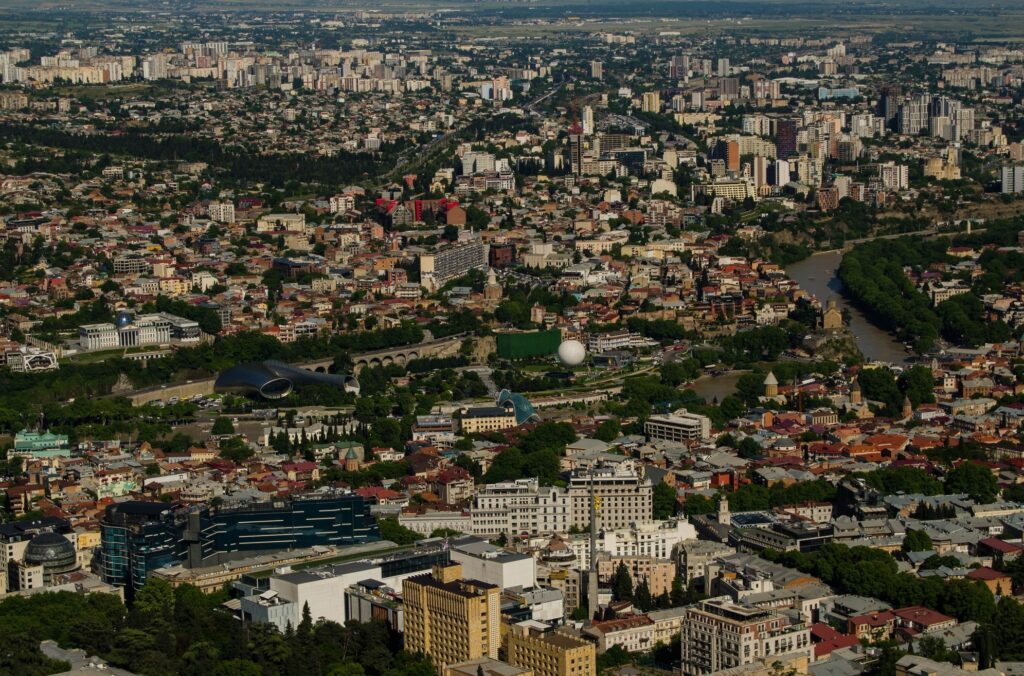
Mtatsminda ranks as one of the most prestigious districts in Tbilisi. It stretches from the right bank of the Kura River all the way up to Mtatsminda Mountain—the highest point in the city. To define its boundaries more clearly, Freedom Square lies to the south, while Rustaveli Metro Station marks the northern edge.
Be prepared for elevation changes: this is one of those districts where walking quickly turns into a workout. Buildings climb steep slopes, rising from Rustaveli Avenue and Freedom Square up toward the mountain, crowned by a Ferris wheel and TV tower. However, much like in the Old Town, central proximity comes with trade-offs. Housing stock is often outdated, which can lead to occasional issues with utilities. In addition, accommodation here tends to be expensive.
On the bright side, many consider Mtatsminda home to some of the best bars and cafés in the city. As a result, you won’t need to travel far for breakfast or nightlife. Moreover, some of Tbilisi’s most picturesque streets are located here, rivaling even Sololaki. From Kakabadze Street, numerous trails lead up the mountain; along the way, you’ll frequently come across scenic clearings with fire pits and panoramic city views.
What to See
Mtatsminda offers an impressive concentration of architectural landmarks. At its core runs Shota Rustaveli Avenue, the city’s main thoroughfare. Along this avenue, government buildings stand alongside international boutiques, restaurants, and souvenir shops. At the same time, visitors can admire key landmarks such as the 19th-century Vorontsov Palace, the Neo-Georgian Kashveti Church (1907), and the buildings housing the National Gallery and the Museum of Georgia. Notably, the museum’s collection spans multiple eras, featuring everything from ancient human remains dating back 1.8 million years to the famed Vani gold jewelry.
If you walk downhill from Rustaveli Avenue toward the Kura River, you’ll reach Sukhoi Most—the city’s well-known flea market. Since the 1990s, it has attracted visitors searching for unique finds. Here, you can browse everything from vintage clothing and vinyl records to books and antique tableware.
Meanwhile, on the opposite side of the avenue, the district rises toward Mtatsminda Mountain. To reach the summit, you can take the funicular, which leads to an amusement park with rides, cafés, and several panoramic viewpoints overlooking the city.
Further along the slopes, the Mtatsminda Pantheon serves as the resting place for prominent Georgian writers, artists, and public figures. For instance, Alexander Griboyedov and his wife Nino Chavchavadze are buried here. Below the pantheon stands the Church of St. David (Mama Daviti). Closer to Rustaveli Avenue, you’ll also find key institutions such as the Georgian Parliament, the Supreme Court, and the Rustaveli and Griboyedov Theaters.
Food and Entertainment
For a relaxed evening, head to The Creek, an international bar popular among both locals and expats. Alternatively, if you’re craving khinkali, visit Zodiaqo near 9 April Park—just look for the line at the entrance. Even if there’s a wait, the surrounding architecture makes the time pass quickly.
For shopping, explore Galleria Tbilisi, which features a mix of local and international brands, or visit the multi-brand boutique Boygar’s.
Vera
Distance to the city center: 15 to 20 minutes.
Vera unfolds on the right bank of the Kura River, stretching from Rustaveli Metro Station toward the Tbilisi Zoo. If you walk north along Rustaveli Avenue and turn left, you’ll soon find yourself in this district.
In many ways, Vera resembles Sololaki, with its older buildings and abundance of cafés. However, it also stands out thanks to its creative energy: trendy galleries and boutiques showcasing Georgian designers are scattered throughout the neighborhood. At the same time, Vera Park provides a green escape. In its center stands a Soviet-era complex housing a billiards hall, a climbing wall, and the lively Dogtown bar. More recently, an observation deck was added, offering panoramic views over Tbilisi.
Historically, the area began developing in the mid-19th century and quickly attracted the city’s intelligentsia and artistic circles. Consequently, Vera earned a reputation as Tbilisi’s version of Montmartre. Back then, numerous gardens made it a popular leisure destination.
Today, Vera has evolved into a well-established and comfortable neighborhood. Thanks to convenient metro and bus connections, reaching the city center is easy. Meanwhile, the streets remain lively, lined with shops, cafés, bars, and hotels.
What to See
Vera offers several interesting landmarks. For example, the Tbilisi Philharmonic—a distinctive circular structure made of glass and concrete—stands near the center of the district. In addition, the Church of St. Andrew the Apostle, built in the 12th century, draws attention with its blue domes, earning it the nickname “Blue Monastery.”
Entertainment and Food
For something unique, stop by the MORE IS LOVE boutique, easily recognizable by its bright yellow door. Nearby, Auditoria Tbilisi combines a bookstore, lecture space, coworking area, and bar into one creative hub.
If you’re in the mood for coffee, head to Fika, run by a Swedish-Georgian owner—its cardamom buns are especially popular. Close by, the Stamba Hotel is worth a visit even if you’re not staying there. Inside, you’ll find a photography museum (with free entry via the restaurant), a stylish bookstore, and the D-block coworking space, which offers a full workspace experience for a daily fee.
Finally, don’t miss the Georgian Museum of Fine Arts, known not only for its exhibitions but also for its photogenic interiors. There is a lot of different hotels for every budget.
Vake
Distance to the city center: from 10 minutes by taxi to significantly longer during peak traffic.
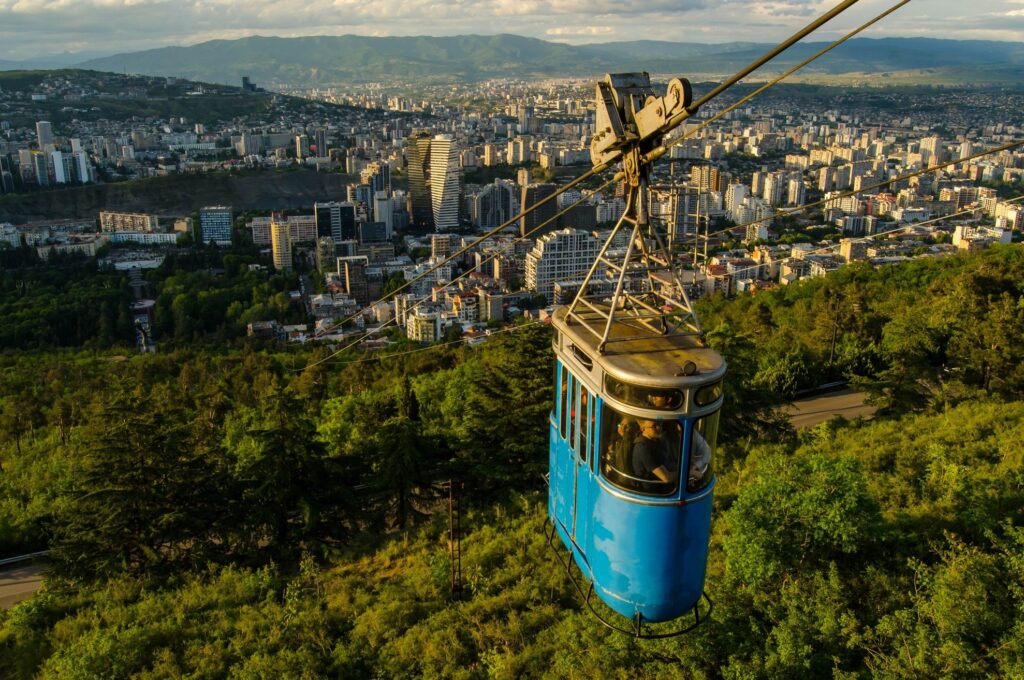
Vake stands out as one of Tbilisi’s most upscale and fashionable districts. Located north of Mtatsminda Mountain, it stretches between Chavchavadze Avenue—lined with boutiques—and the forested hillside. In fact, this is one of the few areas in the city where the atmosphere feels distinctly European.
Historically, Vake remained on the outskirts until the early 20th century. However, everything changed in 1918 with the opening of Tbilisi State University, the country’s first higher education institution. Soon after, poets, writers, actors, and musicians began settling nearby, gradually turning the area into a cultural hub. Later, in the 1950s, neoclassical buildings appeared along Chavchavadze Avenue, giving the district its elegant and cohesive look. Today, the ground floors of these buildings host stylish cafés, wine bars, and boutiques, reinforcing Vake’s modern appeal.
At the same time, living here comes at a price. Property and rental costs are noticeably higher than in most other districts. Moreover, transportation can be frustrating: there is no metro, and traffic congestion during rush hour often turns short trips into lengthy journeys. On particularly busy days, reaching Freedom Square may take up to an hour. Although a dedicated public transport lane has improved the situation slightly, buses themselves often contribute to congestion.
What to See
In addition to its urban appeal, Vake offers some of the city’s best green spaces. Most notably, Vake Park, established in 1946, serves as a major recreational area. A wide stone staircase leads up to a central fountain, creating a pleasant setting for walks and relaxation.
From there, it’s worth continuing to Turtle Lake, located on the northern slope of Mtatsminda Mountain. You can reach it by cable car, with the lower station conveniently located in the park. Nearby, the open-air Ethnographic Museum provides insight into Georgia’s regional architecture. The museum features around 70 traditional structures—houses, towers, and farm buildings—from regions such as Kakheti, Adjara, and Svaneti. Altogether, exploring both the park and the museum can easily fill an entire day, so it’s best to plan ahead.
Food and Entertainment
Vake offers no shortage of cafés and restaurants. Among them, LAZY stands out—its pâté, tiramisu, and pizza are particularly popular. After a walk in the park, it’s an ideal place to unwind.
For shopping and lifestyle spots, consider:
- G.Bar — a well-known beauty studio,
- 8000 Vintages — a large wine shop with an extensive selection of Georgian wines,
- Lui Coffee — a 24-hour café with a varied menu,
- Pinky Pan — known for creative pancake variations,
- Daisy — a cozy spot for pastries and simple meals.
Additionally, the 24-hour Snap Fitness gym is located nearby, although it tends to get crowded in the evenings, especially during group sessions.
Chugureti
Distance to the city center: 10 to 20 minutes, depending on proximity to the metro.
Chugureti is one of Tbilisi’s oldest and most distinctive neighborhoods, known for its intimate and authentic atmosphere. Compared to central districts, it offers more affordable housing while still providing plenty of places to explore.
Geographically, the district lies on the left bank of the Kura River, opposite Vera and Mtatsminda. Although it sits slightly away from the main tourist attractions, Chugureti functions as a fully developed urban area in its own right. It includes major landmarks such as the central train station, Dinamo Stadium, and Saarbrücken Square. For visitors, the most convenient areas are near the Marjanishvili metro station and around the Fabrika complex.
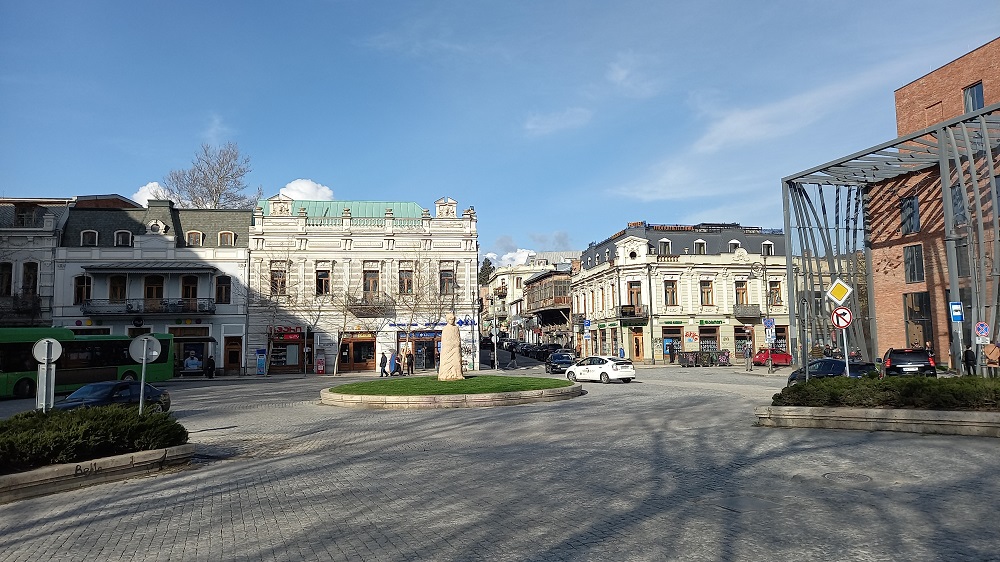
Architecturally, Chugureti presents an eclectic mix. On one hand, David Agmashenebeli Avenue showcases elegant 19th-century mansions with decorative facades, cobblestone streets, and cozy cafés. Thanks to its refined appearance, this avenue is often called the “Paris of Tbilisi.” Recently renovated, part of it has even been turned into a pedestrian zone, making it one of the city’s most pleasant walking areas.
On the other hand, the district embraces contrast. Alongside historic buildings, you’ll find former industrial spaces covered in graffiti, modern coffee shops, and creative hubs. The most famous of these is Fabrika, a design hostel set in a former garment factory. Here, visitors can stay overnight or simply explore the space. The courtyard hosts cafés, workshops, and small shops, while the interior includes a free coworking area.
Cultural life also thrives here. The district is home to the Niko Pirosmani and Ilia Chavchavadze museums, as well as historic cinemas like Apollo and Nakaduli. Meanwhile, the Desertirka bazaar offers a lively market experience, where locals shop for fresh produce and regional specialties.
Unlike many other parts of Tbilisi, Chugureti is relatively flat. As a result, walking around is much easier. For example, the distance from Train station Square to Freedom Square is about four kilometers—just a short metro ride away.
Food and Shopping
Agmashenebeli Avenue is packed with eateries, many of them Turkish. For instance, Nasimi serves kebabs around the clock.
Other notable spots include:
- Salut! — a café combined with a flower shop,
- A street of small antique stores — perfect for browsing unique finds,
- Rose Park — a charming green space with a café, hotel, and plant shop,
- OTKHI — a workshop and store specializing in unique ceramics.
Saburtalo
Distance to the city center: 20 to 40 minutes, depending on traffic and neighborhood.
Saburtalo is a large, well-connected district with its own metro line, centered around Alexander Kazbegi and Vazha Pshavela avenues. Most buildings date from the 1980s, but modern developments are plentiful. Visitors can easily rent apartments with contemporary renovations, balconies, jacuzzis, and other amenities—all at reasonable prices, which is much harder to find elsewhere in Tbilisi.
For longer stays, Saburtalo is an excellent choice. It combines affordability, convenient transportation, and well-developed infrastructure, making it a comfortable base for exploring the city. Unlike the tourist-heavy districts, Saburtalo offers a dynamic, lived-in city vibe with wide avenues, high-rise buildings, shopping centers, restaurants, bars, and numerous public transport options, including a full metro line and extensive bus network.
What to See
While Saburtalo is not known for traditional tourist attractions, it boasts several unique landmarks. The Ministry of Motorways, built in 1974 by architect Giorgi Chakhava, is a postmodern marvel. Its unusual design resembles stacked beams, with vertical sections housing elevators and staircases and horizontal sections containing office space. Today, the building functions as a Georgian bank.
Another standout is the Brutalist residential complex on the Nutsubidze Plateau. The interconnected buildings, linked by pedestrian bridges, are among the most recognizable examples of Soviet-era architecture in Tbilisi.
Despite its urban density, Saburtalo offers easy access to nature. Lisi Park, with its namesake lake, provides a recreational escape: visitors can stroll along the shore, cycle, fish, take a catamaran ride, or sunbathe on wide pebble beaches. The surrounding forested park also features playgrounds, sports fields, photo spots, and cafés, making it a versatile destination for both relaxation and activity.
Transportation
Saburtalo is conveniently served by six metro stations along the Saburtalo Line: Tsereteli, Technical University, Medical University, Delisi, Vazha-Pshavela, and State University. A trip to the city center takes roughly 30 minutes, ensuring that Saburtalo never feels like a distant suburb.
Shopping and Entertainment
The City Mall on Kazbegi Avenue is the district’s main shopping hub, easily accessible from across Saburtalo and other parts of Tbilisi. Daily needs are also covered with supermarkets, pharmacies, clinics, beauty salons, and cafés nearby. Popular cafés include Daisy, Coffee Lab, 2 Tona, and Baho. Wine lovers can visit 8000 Vintages or Wine & Dine, while coffee enthusiasts can enjoy a cup at Coffee Lab. For nightlife, Khidi stands out as one of the city’s most famous clubs, drawing both locals and visitors.
Isani
Distance to the city center: 15 minutes by metro to Freedom Square.
Isani is a residential district on the left bank of the Kura River, bordering Samgori, Krtsanisi, and Chugureti. Its proximity to the historic center allows for convenient access to Tbilisi’s main attractions, while still retaining a quiet, local atmosphere.
The district’s name originates from the ancient Isani Fortress, first mentioned in the 11th century, although the fortress itself no longer exists. Today, Isani is primarily residential and not geared toward tourists, offering a peaceful alternative to the bustling city center.
Transportation
Isani is served by two metro stations — “Isani” and “Samgori” — and multiple bus routes. The local bus station also provides minibuses to Kakheti, including the cities of Sighnaghi and Telavi, making it easy to plan day trips outside Tbilisi.
Infrastructure
The district has basic but functional infrastructure. Isani Mall, local grocery stores, and small eateries provide for daily needs, while the Samgori area hosts a larger market. Schools and kindergartens are present, but cafés, restaurants, and entertainment options are limited compared to the city center. Fitness enthusiasts may need to travel to Mtatsminda or other central districts for gyms with higher ratings.
Housing
Most buildings in Isani are Soviet-era constructions. The neighborhood is ideal for travelers or residents seeking affordable, quiet housing away from the tourist crowds. Short-term rentals are very reasonably priced, with one-bedroom apartments available for $30–$35 per night.
Didube
Distance to the city center: 15–25 minutes by metro, depending on the exact location.
Didube developed along Akaki Tsereteli Avenue and the surrounding streets, including the Cosmonauts Embankment. The district borders Nadzaladevi, Chugureti, Saburtalo, and Tbilisi’s northern outskirts. Historically, the Tbilisi–Poti railway divided the area: the northeastern section became Nadzaladevi, while the rest remained Didube. Many locals consider Didube an extension of Saburtalo.
The district’s name comes from the historic settlement and the Church of the Virgin Mary of Didube. Didube also hosts several historic sites, including the Didube Pantheon of Writers and Public Figures, established in 1893. Notable Georgians buried here include the poets Nikoloz Baratashvili and Alexander Kazbegi.
Didube is home to the Paichadze National Stadium and Space Hall, a concert venue for music events and performances. Beyond this, entertainment options are limited.
Transportation
The district is well connected via the Didube, Gotsiridze, and Tsereteli metro stations, as well as multiple bus routes and a bus station serving the city and surrounding areas.
Infrastructure
Infrastructure in Didube is basic but functional. The district offers supermarkets, bakeries, small cafés, schools, and kindergartens. Other notable facilities include the Silk Museum and the Expo-Georgia exhibition center. For fitness, Reform Gym is conveniently located next to the metro station.
Housing
Didube’s residential areas consist mostly of high-rise apartment blocks built between the 1950s and 1980s, along with smaller two- or three-story houses. The housing stock is generally old, and many buildings have not been renovated in decades—a characteristic shared by Tbilisi’s outlying districts. Short-term accommodation near the Didube metro station typically costs around $40 per night, while options slightly further away can be found for $30–$35.
Areas of Tbilisi to avoid
While Tbilisi offers many charming and lively districts, some neighborhoods are less suitable for tourists or newcomers due to distance from the center, limited infrastructure, or a lack of attractions.
Gldani
Gldani is a typical Soviet-era dormitory area on the northern outskirts of Tbilisi, dominated by Khrushchev- and Brezhnev-era apartment blocks. It is primarily residential, inhabited by locals, and has almost no appeal for tourists. There are no notable landmarks, architectural highlights, or cultural attractions, and cafes, restaurants, and entertainment options are scarce. Travel to the city center takes about an hour by public transport from Gldani Park.
Nadzaladevi
Located in the northeast, Nadzaladevi is commonly known as Nakhalovka. Its name comes from “nakhal” (brash), reflecting how workers settled here in the late 19th century without official permission. Historically, the area was considered a criminal hub. Today, it remains non-touristy and offers little to explore—there are no attractions, and the architecture is mostly utilitarian.
Samgori
Similar to Isani but farther from the center, Samgori is a quiet residential district. The metro runs through the area, but it takes 40–50 minutes to reach Freedom Square. On the upside, it’s only a half-hour bus ride from the Samgori station to Tbilisi International Airport. The district has a large shopping center, East Point, and a major market. Housing and dining prices are lower than in Isani, making it a viable option for budget-conscious residents, though convenience is limited. There is a sub-district Varketili with metro station and a lot of expats living.
Krtsanisi
A small residential neighborhood in the southwest, Krtsanisi is known for the historic Battle of 1795 and the monument to the 300 Aragvians. Today, it mainly features modern apartment complexes and has little to attract tourists. The district lacks infrastructure, scenic views, and walkable areas.
In conclusion
Every Tbilisi neighborhood has something unique to offer. For visitors seeking beautiful photos, lively streets, and atmospheric walks, Vake, Saburtalo, Mtatsminda, and Chugureti are the best choices. For those prioritizing affordable long-term rent or purchase, Gldani, Nadzaladevi, and Samgori offer the lowest prices, but you’ll trade off convenience and infrastructure.
All districts have drawbacks: some lack a metro, modern cafes, or renovated housing. Yet each has advantages: Vake and Saburtalo charm with comfort and prestige, Mtatsminda offers stunning city views, Chugureti captivates with European-style architecture, and Isani and Samgori provide affordable housing near key markets and transport hubs.
Choosing a neighborhood ultimately depends on your priorities: staying in the heart of the city and paying more, or saving money, enjoying peace, and accepting longer commutes.